








Clean Air Night 2026: Why How You Burn Matters More Than Headlines
As we mark Clean Air Night 2026, the conversation around air quality in the UK is louder than ever. It is a conversation that matters. We all breathe the same air, and protecting our environment – both indoors and outdoors – is a responsibility we all share.
At Direct Stoves, we believe it is vital to acknowledge that domestic combustion is part of the air quality picture. Ignoring it doesn’t help anyone. However, headlines often paint a black-and-white picture of a very nuanced reality. The truth is, not all wood burning is the same.
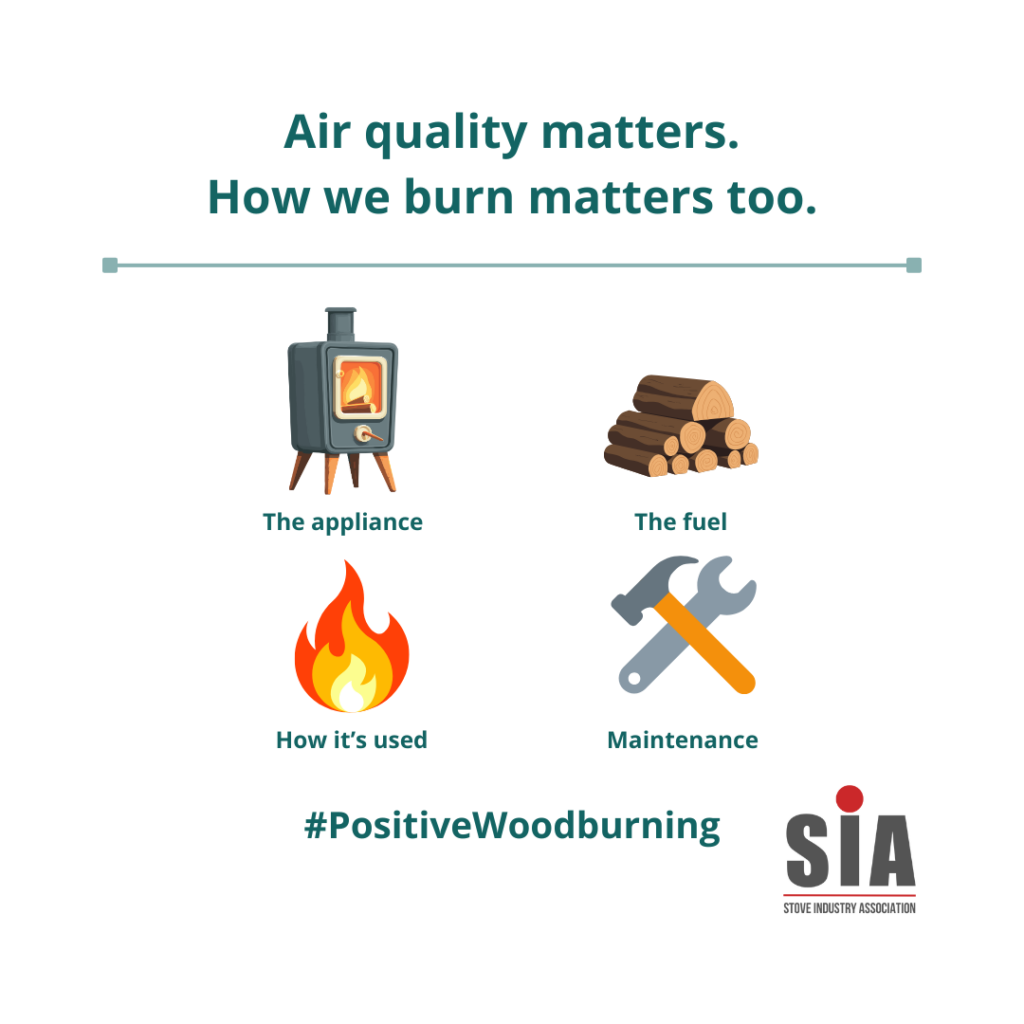
When you strike a match, the emissions produced are not random. They are the direct result of four specific factors: the appliance you use, the fuel you burn, how you operate the stove, and how well you maintain it.
Rather than taking sides in a binary debate, we’ve compiled some practical, evidence-based ways that modern technology and responsible ownership are reducing emissions in real homes across the UK right now.
Not All Wood Burning is the Same
One of the most common misconceptions in the media is the grouping of all ‘domestic combustion’ into a single statistic. This approach lumps a state-of-the-art, high-efficiency stove together with an open bonfire in a garden or an inefficient open fireplace from the 19th century.
To understand the real impact of wood burning on air quality, we have to look at the variables. Emissions are not fixed; they fluctuate wildly based on:
- Appliance Type: Is it an open fire or a closed, engineered system?
- Fuel Quality: Is the wood wet and treated, or dry and natural?
- User Behaviour: Is the user slumbering the fire or burning hot and clean?
- Maintenance: Is the flue clear and the stove drawing correctly?
Since 2020, DEFRA-reported emissions data have begun to reflect a shift. As older, dirty appliances are replaced and public awareness grows, we are seeing that behaviour change delivers measurable gains. The ‘wood burning problem’ is often actually a ‘poor burning problem’.
Modern Ecodesign Stoves vs Older Heating Methods
If you are currently using an open fire to heat your room, you are losing most of your heat up the chimney while sending particulate matter out into your neighbourhood.
The difference between an open fire and a modern Ecodesign stove is night and day. Ecodesign isn’t just a marketing buzzword; it is a rigorous European and UK standard that sets strict legal limits on emissions and efficiency.
When you upgrade from an open fire to an Ecodesign-compliant stove, the results are drastic:
- Particulate Emissions: Reduced by up to 90%.
- Efficiency: Increased from roughly 20% (open fire) to 80%+ (modern stove).
- Fuel Usage: Because they are more efficient, you burn significantly less wood to generate the same amount of heat.
Modern stoves are the result of years of engineering and regulation. They feature secondary and tertiary burn systems that re-ignite smoke particles before they leave the firebox, converting potential pollution into useful heat.
Fuel Quality – One of the Biggest Emissions Factors
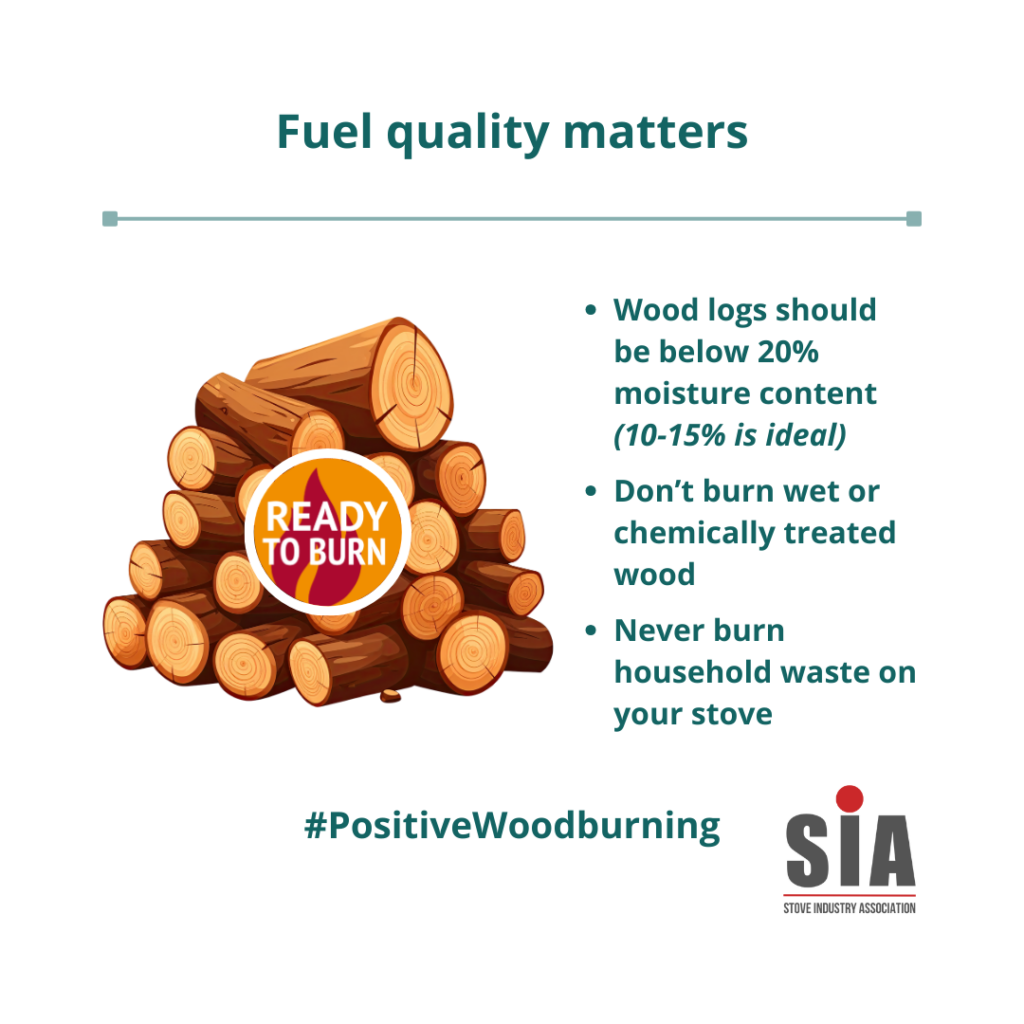
You can have the most expensive, high-tech stove in the world, but if you put wet wood inside it, it will pollute. Fuel quality is arguably the single biggest variable under your control.
Burning ‘wet’ or ‘green’ wood requires the fire to boil off the water before it can generate heat. This lowers the combustion temperature, causing incomplete burning and heavy smoke.
The Best Practice Checklist:
- Moisture Content: Always burn wood with a moisture content below 20% (10-15% is the ‘Goldilocks’ zone).
- Ready to Burn: Look for the Woodsure ‘Ready to Burn’ logo. This guarantees the wood is legally compliant and dry enough for immediate use.
- Storage: Store logs in a dry, well-ventilated area, off the ground.
- Test It: Buy a moisture meter. They are inexpensive and essential for responsible burning.
The Absolute ‘Don’ts’:
Never burn treated wood (like old fence posts), painted timber, or household waste. These release toxic chemicals that are harmful to your health and the environment.
Learn More: What Not to Burn in Your Wood-Burner
How You Light and Refuel Your Stove Matters
Did you know that most smoke is produced during the lighting phase and when refuelling? Learning to operate your stove correctly is a skill that directly improves air quality.
Top-Down Lighting:
Forget the old way of scrunching paper under a pyramid of logs. Use the ‘Top-Down Method’. Place large logs at the bottom, smaller kindling on top, and your firelighter on the very top. This heats the flue faster and burns off smoke from the logs below as the fire burns downwards.
Learn More: Step-by-Step: Building and Lighting a Fire in Your Wood Burner
Refuelling Tips:
- Don’t Overload: Give the air room to circulate.
- Open Slowly: When adding a log, crack the door slightly for a few seconds to equalise pressure before opening it fully. This prevents smoke from spilling into the room.
- Stop ‘Slumbering’: Turning the air vents right down to keep the fire on overnight creates a smouldering, cool burn that produces high levels of pollution and tar (creosote). Burn hot, burn clean, and let it go out.
Chimney Sweeping Isn’t Just About Safety
We often think of chimney sweeping purely as a way to prevent chimney fires. While that is true, a professional sweep is also your best ally in reducing emissions.
A swept chimney ensures a strong, consistent draw (airflow). Without good airflow, your stove cannot reach the temperatures required for secondary combustion, meaning you send more smoke out of the chimney.
What’s more, a professional sweep is a consultant for your home. They can identify:
- If you are using poor-quality fuel (indicated by tar buildup).
- If your burning habits need adjusting.
- If your appliance has developed faults, such as worn door seals letting in too much air.
Booking an annual sweep is one of the simplest, most effective actions a household can take for clean air.
Domestic Wood Burning is Already Highly Regulated
It is important to remember that the stove industry is a highly regulated sector that has embraced tighter standards.
- Ecodesign Standards: All new stoves manufactured since 2022 must meet these strict criteria.
- Smoke Control Areas: Most urban areas in the UK have rules requiring the use of DEFRA-approved appliances and authorised fuels.
- Competent Persons: Installation is regulated through bodies like HETAS to ensure safety and efficiency.
The path forward isn’t necessarily about more regulation, but about better enforcement of existing rules and continued education. Ensuring people stop burning wet wood on open fires will do far more for air quality than banning high-efficiency stoves.
A Sector That’s Still Improving
The stove industry hasn’t stopped at Ecodesign. Manufacturers are currently investing heavily in the next generation of combustion technology.
From electrostatic precipitators (filters for chimneys) to automated air-control systems that optimise the burn without human intervention, the sector is forward-thinking and responsive. We are committed to evidence-led progress, ensuring that wood burning remains a sustainable, low-carbon heating option for the future.
Improving Air Quality is About Better Choices
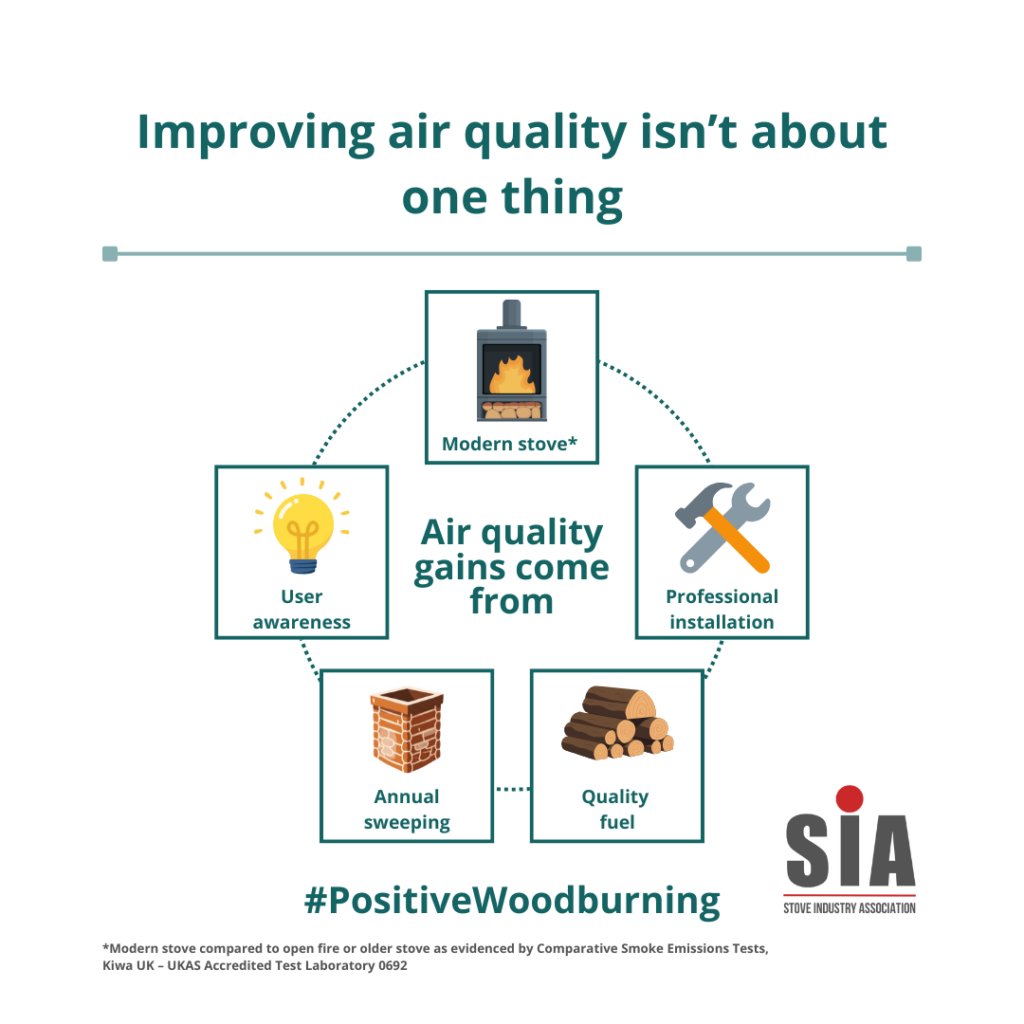
Clean Air Night 2026 serves as a reminder that we all have a role to play. But improving air quality isn’t about removing choice; it’s about making better choices.
If we focus on these four principles – Better Appliances, Better Fuel, Better Use, and Better Understanding – we can enjoy the warmth and security of wood heating while respecting the air we breathe.
Let’s move past the headlines and focus on the practical actions that make a real difference.
Frequently Asked Questions (FAQ)
Are wood burning stoves going to be banned in the UK?
There is currently no legislation proposing a total ban on wood burning stoves in the UK. The government’s Clean Air Strategy focuses on ensuring that only modern, Ecodesign-compliant stoves are sold and used with the right fuel. The focus is on cleaning up burning, not banning it.
What is the difference between DEFRA-approved and Ecodesign?
Ecodesign is a manufacturing standard regarding efficiency and emissions that all new stoves must meet. DEFRA-approved (or DEFRA-exempt) refers to a stove that has been tested and allowed for use in UK Smoke Control Areas (usually cities and large towns). Most modern stoves are now both Ecodesign-compliant and DEFRA-approved.
Can I still use my open fire?
While it is not illegal to use an existing open fire (unless you are in a Smoke Control Area and burning unauthorised fuel), it is highly discouraged. Open fires are the least efficient and most polluting way to burn wood. Upgrading to a stove can reduce particulate emissions by up to 90%.
How do I know if my wood is dry enough?
The best way is to look for the ‘Ready to Burn’ certification mark on the packaging. Alternatively, you can buy a moisture meter to test your logs. Split a log and test the internal face; the reading should be 20% or lower.
Is wood burning carbon neutral?
Wood is considered a low-carbon fuel. Trees absorb carbon dioxide as they grow. When wood is burned, it releases that carbon back into the atmosphere. If the wood is sourced from sustainably managed forests where trees are replanted (as most UK firewood is), the cycle is broadly carbon neutral, especially compared to fossil fuels like gas or oil.
Why does my stove glass get black?
Black stove glass is usually a sign of incomplete combustion. This can be caused by burning wet wood, closing the air vents too early (slumbering the fire), or a poor chimney draw. Try burning dry wood and keeping the air vents open slightly longer to raise the firebox temperature.
How often should I have my chimney swept?
You should have your chimney swept at least once a year. If you use your stove very frequently, or if you have burned wood that wasn’t perfectly dry, you may need a mid-season sweep.
What is ‘slumbering’ a stove and why is it bad?
Slumbering is the practice of filling the stove with logs and shutting the air vents right down to try and keep the fire burning slowly overnight. This starves the fire of oxygen, leading to a cool burn that produces excessive smoke and dangerous creosote (tar) buildup in the chimney, which is a fire hazard and a major pollutant.