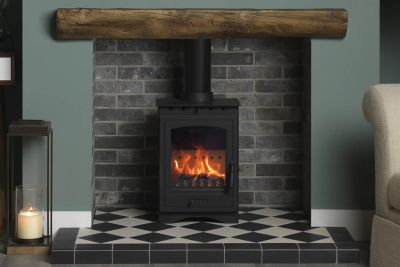


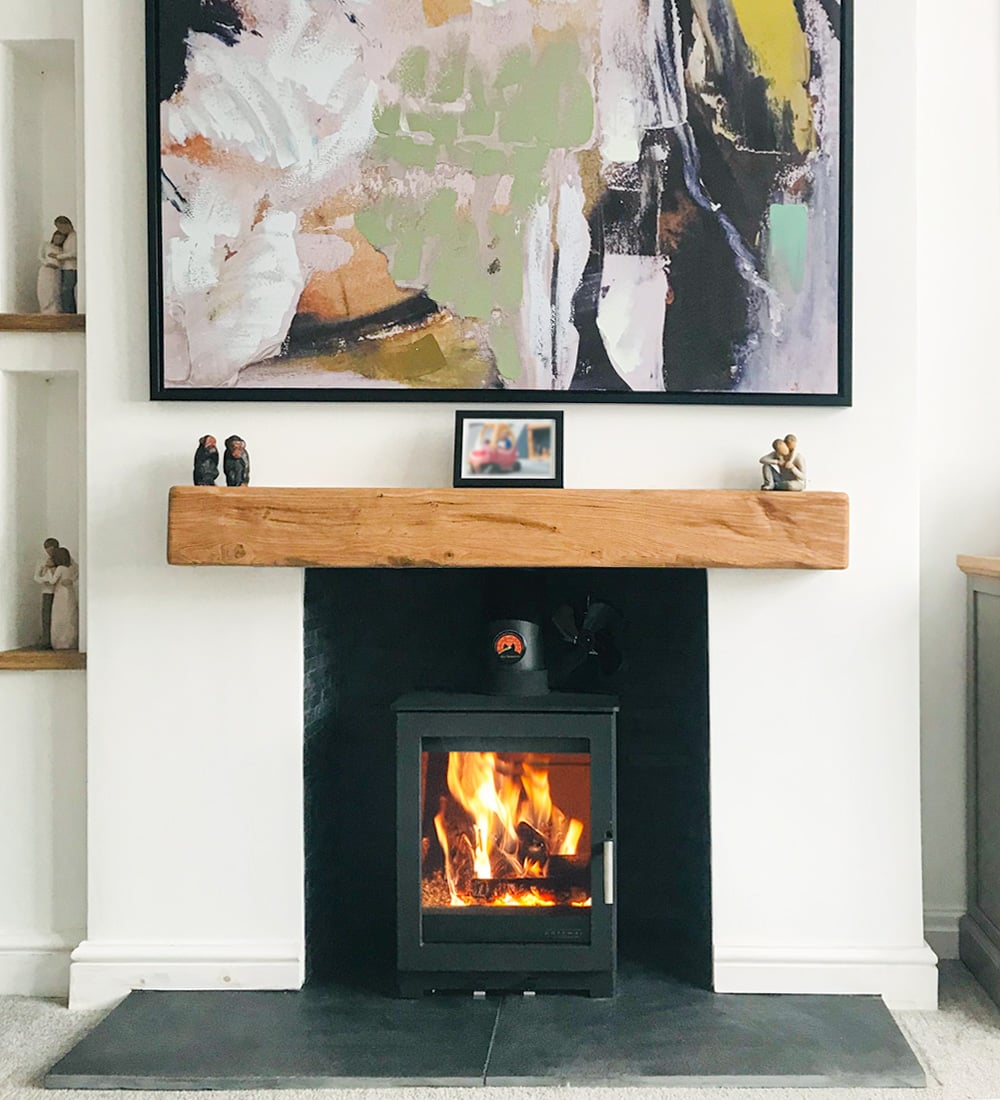







How to Heat the Room You Use Most (Without Heating the Whole House)
⏱️ Time to read:
When energy bills bite, the instinct is obvious: why pay to heat four bedrooms, a hallway, and a kitchen when you are only sitting in the living room? It feels like basic maths: if you only heat one room, you should save money.
But heating doesn’t work like a simple equation. Houses are not designed to be heated unevenly. Most central heating systems are designed to maintain a baseline temperature across the entire property.
While targeted, or “zonal” heating can drastically reduce your energy costs, doing it wrong can lead to freezing bedrooms, damp walls, and electricity bills that completely wipe out your savings.
Here’s how one-room heating actually works in the real world — and how to do it without damaging your home.
🧠 Quick Answer: Is it cheaper to heat one room instead of the whole house?
Yes — heating a single room is usually cheaper, especially in larger homes or when you’re only using one space, but only if you use the right heat source and don’t let the rest of your home get too cold.
It works best when:
- ✅ You spend most of your time in one room (e.g., a living room or home office).
- ✅ Your main heating system heats the whole house inefficiently.
It doesn’t work as well when:
- ❌ Your home relies on central heating for hot water or to balance insulation and prevent damp.
- ❌ You need consistent warmth across multiple rooms throughout the day.
The best option depends on your home, your heating system, and how you actually live day to day.
🔑 Key Takeaways
- Heating one room can cut energy use significantly, but it isn’t always the cheapest option long-term if you rely on the wrong heat source.
- Zoning your heating (lowering the central heating while boosting one room) is often smarter than completely switching your main system off.
- Different solutions suit different homes: small flats do well with electric heating, while older homes benefit massively from the high heat output of a log burner.
- Comfort matters just as much as cost — cold bedrooms, condensation, and mould are real trade-offs if you let the rest of the house freeze.
📍 Find what you need
Short on time? Skip straight to what matters.
- Why People Are Switching to One Room Heating
- Heating One Room vs Whole House
- When Heating One Room Actually Saves You Money
- When It Doesn’t Work (or Backfires)
- Common Mistakes That Increase Costs
- Best Ways to Heat a Single Room
- Best Option by Home Type
- Smart Ways to Make It Work Better
- What’s the Cheapest Way to Heat One Room in the UK?
- Frequently Asked Questions
- Final Advice: Should You Heat One Room or the Whole House?
Why People Are Switching to “One Room Heating”
The shift towards heating a single room is a behavioural change, not just a temporary cost hack. With energy costs one of the most significant household expenses in 2026, people are rethinking how they manage their homes.
The rise of working from home means many of us only occupy one or two rooms during the day. Running a 24kW gas boiler to heat an empty house is inherently wasteful. Central heating is designed for whole-house comfort, but when you only need a warm office or a cosy living room, targeted heating simply makes more sense.
Heating One Room vs Whole House: The Real Difference
| Factor | One Room Heating | Whole House Heating |
|---|---|---|
| Cost | Lower (if used correctly) | Higher overall |
| Comfort | Warm in one space | Even warmth |
| Efficiency | High if targeted | Often wasteful |
| Setup | May need extra appliance | Already installed |
| Flexibility | High | Low |
When Heating One Room Actually Saves You Money
Targeted heating is highly effective — but only under the right conditions. It works best when:
- ✅ You’re home alone most of the day: There is no need to heat family spaces if it’s just you in the home office.
- ✅ You mainly use one living space: Perfect for “evening use only” when the household gathers in the living room after work.
- ✅ Your home loses heat quickly: In older, draughty properties, trying to keep the whole house at 20ºC is an expensive losing battle. Heating the room you are in is much more efficient.
- ✅ You’re trying to reduce reliance on gas/oil: Using a secondary heat source allows you to delay turning on the central heating until much later in the year.
👉 On oil heating and looking to cut back? Read our guide to cutting oil heating costs with a stove.
When It Doesn’t Work (or Backfires)
This is where many people make expensive mistakes. Turning off the boiler and plugging in a heater is not a guaranteed money-saver. It fails when:
- ⚠️ You use electric fan heaters all day:
Standard plug-in electric heaters consume massive amounts of electricity. Running one for 8 hours a day can quickly cost more than running your gas central heating. What feels like a cheap fix can quietly become one of the most expensive ways to heat your home. - ⚠️ Cold rooms lead to damp:
Houses need ambient heat to keep moisture at bay. If unused rooms drop below 14ºC, condensation forms on cold walls, leading directly to mould risk. Once damp sets in, the cost of fixing it wipes out any savings you made. - ⚠️ You still need heating elsewhere:
If you are constantly moving between the kitchen, bathroom, and living room, heating just one room will leave you uncomfortable and cold.
This is why most heating advice focuses on balance — not extremes.
💡 Worth Knowing: Constantly reheating a cold house uses more energy than maintaining a low, steady background temperature — big temperature swings are where costs quietly creep up.
Common Mistakes That Increase Costs
| Mistake | What Happens |
|---|---|
| Using electric heaters all day | Running costs exceed central heating |
| Letting rooms drop below 14ºC | Damp and mould risk increases |
| Turning heating fully off | House becomes uncomfortable and harder to reheat |
Heating one room works best as a strategy — not a complete replacement for heating your home.
Best Ways to Heat a Single Room (By Situation)
If you’re consistently heating one room, investing in a more efficient, dedicated heat source quickly becomes worth considering. The right solution depends less on the idea of “one room heating” — and more on how long you need that room to stay warm.
Wood-Burning or Multi-Fuel Stove

- Best for: Older homes, main living rooms, and large spaces.
- ✅ Pros: Exceptional heat output, highly efficient fuel use, and provides independent off-grid heat.
- ❌ Cons: Requires an upfront investment and professional installation.
- 👉 Explore our range of wood-burning and multi-fuel stoves to compare heat outputs and styles.
👉 Thinking about getting a wood-burning stove? Read our buying guide to find the right option for your home.
Gas Stove

- Best for: Homes already connected to the gas grid.
- ✅ Pros: Strong, consistent heat at the push of a button with lower running costs than standard electric heaters.
- ❌ Cons: Less flexible placement due to flue and gas line requirements.
- 👉 Browse gas stoves to compare styles and heat outputs.
💡 Worth knowing: No chimney? You’ve still got options
Gas stoves don’t always need a chimney.
- Balanced flue models vent straight through an external wall using a sealed system
- Flueless models don’t need a flue at all, but must be installed in a well-ventilated room
They’re ideal for homes without a chimney — just make sure installation meets UK safety requirements.
Electric Stoves

- Best for: Flats, well-insulated modern homes, or occasional use.
- ✅ Pros: 100% efficient at the point of use, easy to install, and highly flexible.
- ❌ Cons: Electricity is typically the most expensive fuel per unit in the UK; high running costs if used as a primary heat source for long periods.
- 👉 Compare electric stoves to find the right balance of heat and convenience.
⚠️ Reality Check: Electric heating is ideal for short bursts — but if you rely on it for hours every day, the running costs add up quickly.
Bioethanol Stoves

- Best for: Quick, occasional heat and aesthetic appeal.
- ✅ Pros: No chimney or flue needed, real living flame, completely flexible.
- ❌ Cons: Fuel can be costly and is not designed to be a primary, all-day heating source.
- 👉 Explore our range of bioethanol stoves for flexible, no-flue heating.
👉 Not sure if bioethanol is right for you? Read our guide comparing bioethanol vs wood-burning stoves.
Best Option by Home Type
Your property type will help you decide the smartest way to heat a single space.

Small Flat / Apartment
A compact electric stove will be ideal for you. Spaces are small enough that the room heats quickly before electricity costs become noticeable.
🔥 Product examples: The 5 best electric stoves for small flats
1. Gazco Stockton 2 Electric Stove
🫶 Why we love it: A compact, no-fuss option that fits easily into smaller rooms. It gives you steady, controllable heat without overwhelming the space.
2. Evonic e-lectra Campden 5 Electric Stove
🫶 Why we love it: Compact and contemporary, with clean lines that suit modern flats. It delivers controlled heat in smaller spaces without feeling bulky.
3. Dimplex Oakhurst Optimyst® Electric Stove
🫶 Why we love it: Uses water vapour technology to create a highly realistic flame effect. Ideal if atmosphere matters just as much as heat.
4. Celsi Electristove VR Stratford Electric Stove
🫶 Why we love it: Combines strong heat output with impressive flame visuals. It adds a proper “stove feel” without needing a large space.
5. Gazco Vogue Midi Electric Stove
🫶 Why we love it: Slightly more modern in design, but still practical for everyday use. It balances good heat output with a size that works well in flats.
In smaller spaces, the goal isn’t maximum heat — it’s quick, controllable warmth that suits how you actually use the room.
Semi-Detached / Family Home

Use a wood-burning, multi-fuel, or gas stove alongside partial central heating. Use the stove to heat the living room in the evening, while keeping the central heating on a low background setting to protect the rest of the house.
🔥 Product examples: Our top 5 stoves for zoned heating in family homes
1. Axon Bolesworth Multifuel Stove
🫶 Why we love it: A well-balanced, efficient stove that’s ideal for everyday use. It delivers strong, consistent heat for a living room without feeling excessive.
2. Woodford Carrington 5 Wood Burning Stove
🫶 Why we love it: An award-winning design that combines strong performance with clean styling. It’s built for reliable, efficient heating in a typical living room.
3. Woodford Lowry 5X Multi-Fuel Stove
🫶 Why we love it: Offers flexibility to burn both wood and smokeless fuels, which can help manage running costs over time. A practical, no-nonsense choice for family homes.
4. Gazco Stockton 5 Gas Stove
🫶 Why we love it: Instant heat at the push of a button, with no need to manage fuel. A great option if you want the benefits of zoned heating with minimal effort.
5. Hunter Herald 5 Ecodesign Wood Burning Stove
🫶 Why we love it: A well-built, efficient stove designed for regular use. It produces a strong, even heat that works well alongside background central heating.
For most family homes, a 5kW stove is the sweet spot for heating a living room comfortably without overheating the space.
Older / Less Insulated Home
A wood-burning or multi-fuel stove is the best option here. Zone heating works particularly well in older homes. A stove provides intense, radiant heat that easily combats the draughts and heat loss typical of these properties.
🔥 Product examples: The best 5 stoves for older or less insulated homes
1. Axon Bolesworth Multifuel Stove
🫶 Why we love it: A sturdy, well-built stove that delivers consistent radiant heat. Its simple, understated design works well in both modern and period-style spaces.
2. Woodford Lowry 5XL Widescreen Multi-Fuel Stove
🫶 Why we love it: A wider, more traditional stove that throws out strong, steady heat. The widescreen design gives a better view of the fire, while the multi-fuel option adds flexibility for longer burns.
3. Charnwood C-Five Wood Burning Stove
🫶 Why we love it: A premium option with timeless styling and excellent build quality. It’s designed to perform well in real homes, not just look good in showrooms.
4. Stovax Stockton 5 Wood Burning Stove
🫶 Why we love it: A traditional favourite with a simple, durable design. It delivers dependable heat and suits older interiors without looking out of place.
5. Chesneys Salisbury 5 Wood Burning Stove
🫶 Why we love it: A refined, traditional design with excellent build quality. It looks right at home in period properties while delivering strong, consistent heat.
In older homes, a stove isn’t just about heat — it becomes part of the room, so traditional styling often feels like the better fit.
💡 Worth Knowing: Stove output isn’t just about room size — insulation plays a huge role. Poorly insulated homes lose heat faster, so you may need a higher kW output than you would in a modern, well-insulated space.
Open-Plan Space

You need a higher heat output stove. However, open-plan layouts make it harder to trap heat in one “zone”, which can make targeted heating less effective.
🔥 Product examples: The top 5 stoves for open-plan spaces
1. Woodford Chadwick 12 Wood Burning Stove
🫶 Why we love it: Built for serious heat demand. This is the kind of stove you choose when you’ve got a large, open-plan space and need real output to make a difference.
2. Ekol Clarity DS 14kW Double-Sided Multi-Fuel Stove
🫶 Why we love it: A high-output, double-sided stove designed for large, open-plan spaces. It pushes serious heat while helping distribute warmth across connected areas, making it ideal where smaller stoves would struggle.
3. Charnwood Island II Wood Burning Stove
🫶 Why we love it: A premium option with timeless styling and excellent build quality. It’s designed to perform well in real homes, not just look good in showrooms.
4. Stovax Stockton 8 Wood Burning Stove
🫶 Why we love it: A larger version of a proven design, offering dependable, high heat output. A solid choice for open-plan areas where you need more than just background warmth.
5. Fireline Woodtec 8kW Double-Sided Wood Burning Stove
🫶 Why we love it: Designed for open-plan living, this double-sided stove allows heat to flow into two areas at once. It’s ideal for larger, connected spaces where a single-sided stove can struggle to distribute warmth evenly.
In large or open-plan spaces, it’s not just about heat output — it’s about how that heat moves. Double-sided stoves can help distribute warmth more effectively across connected areas.
👉 Not sure what size you need? Use our stove output calculator to find the right kW for your space.
Smart Ways to Make It Work Better
To make one-room heating work, you need a hybrid strategy. You are managing heat loss, not just generating heat.
- Close doors to trap heat: A stove or heater can only warm a room if the heat isn’t escaping into the hallway.
- Use draught excluders: Block gaps under doors and around windows to keep the warm air exactly where you want it.
- Combine with lower central heating settings: Instead of turning the radiators off completely, set the thermostat to a low 14–15ºC to prevent damp, and use your stove or local heater to boost the room you are sitting in to 20ºC.
What’s the Cheapest Way to Heat One Room in the UK? (By Usage)
The cheapest way to heat one room depends on how long you need it each day.
| Usage Pattern | Cheapest Option | Why? |
|---|---|---|
| 30-60 minutes | Electric stove | Fast heat, no warm-up time, efficient for short bursts |
| 2-4 hours | Gas stove | Lower running costs than electric over longer periods |
| 5+ hours daily | Wood-burning or multi-fuel stove | Lowest long-term fuel cost and high heat output |
| Occasional / backup | Bioethanol stove | Flexible, but not cost-effective for regular heating |
This is why the same heating method can feel cheap in one situation — and expensive in another.
- Electric stoves have a higher running cost per hour because electricity has the highest unit price in the UK.
- Gas offers a moderate running cost and heats spaces quickly.
- Wood provides a much lower long-term running cost, provided you buy fuel in bulk and use the stove properly.
If you only need heat for 30 minutes, electric wins. If you need to heat a room for six hours every evening, a wood-burning or gas stove is much more economical.
In simple terms: the longer you need heat, the more important efficiency becomes.
Frequently Asked Questions (FAQ)
Is it bad to only heat one room in winter?
Not necessarily — but extremes can cause problems. Letting the rest of the house get very cold increases the risk of frozen pipes and long-term damp.
Will heating one room cause damp or mould?
It can. If unheated rooms drop below around 14°C, warm air from heated areas can condense on cold surfaces, creating the conditions for mould.
Is it cheaper than central heating in the UK right now?
Often, yes — but it depends on the heat source. Wood and gas can be cost-effective, while running electric heaters for long periods can quickly become more expensive than central heating.
What’s the cheapest way to heat one room long-term?
A high-efficiency wood-burning stove is usually the most cost-effective over time. While installation costs are higher, fuel is typically cheaper than electricity and can be more stable than gas.
Can you sleep in a house where only one room is heated?
Yes, if you’re properly insulated with bedding. However, very cold air below around 12°C can be uncomfortable and may affect breathing, so a low background temperature is recommended.
Should I turn radiators off in unused rooms?
It’s better to turn them down to a frost setting rather than off completely. This keeps the room just warm enough to prevent damp and protect pipework.
Final Advice: Should You Heat One Room or the Whole House?
If you are using one room most of the time, yes — in most cases, it’s a smart way to reduce heating costs.
But the secret to doing it successfully is to think in zones, not extremes. If you’re planning to rely on one-room heating long-term, choosing the right appliance makes a huge difference to both cost and comfort.
Turning off your boiler entirely and relying on a plug-in radiator is a recipe for high bills and a damp house. Instead, lower your central heating to a baseline temperature that protects your home, and use a dedicated, efficient heat source — like a wood, multi-fuel, gas, or electric stove — to bring the room you are actually sitting in up to a comfortable temperature.
By managing your heat smartly, you get the comfort you want without paying for the empty rooms you don’t.
Ready to find the right stove for how you actually use your home?
- 👉 Browse wood-burning stoves
- 👉 View multi-fuel stoves
- 👉 Shop gas stoves
- 👉 Compare electric stoves
- 👉 Explore bioethanol stoves
Need more information? You might also like:
- 👉 Wood-burning stove buying guide
- 👉 Bioethanol vs wood-burning stoves: Which is right for your home?
- 👉 Wood burning vs multi-fuel stoves
- 👉 What you should consider before buying a stove
- 👉 How much does running a wood-burning stove cost?
- 👉 Wood burners vs central heating: How much could you save?
- 👉 How to reduce oil heating costs with a stove
- 👉 How to have a wood-burning stove without a chimney
- 👉 A guide to wood-burning stove installation
- 👉 Installation requirements for gas stoves
Need advice or want to compare options in person?
- 📍 Visit us: See a range of wood-burning, multi-fuel, gas, electric and bioethanol stoves — and get expert advice on choosing the right one — at our showrooms.
- 📧 Get in touch: Contact our team for tailored advice or installation queries.
↑ Back to top | Jump to sections ↑