








How to Reduce Oil Heating Costs When You Can’t Switch Systems
⏱️ Time to read:
If you rely on oil heating, you’ve probably noticed how unpredictable it’s become. In early 2026 alone, prices spiked dramatically, with some households seeing costs double in a matter of days. Unlike mains gas or electricity, heating oil has no energy price cap, meaning there is no protection for consumers when the market spikes.
You’re not imagining it — costs have become increasingly unpredictable, and you’re exposed to it.
Ripping out a functioning oil boiler and replacing it with a heat pump or biomass system requires a massive upfront investment that simply isn’t feasible for everyone.
But you don’t have to replace your system to take back control of your bills.
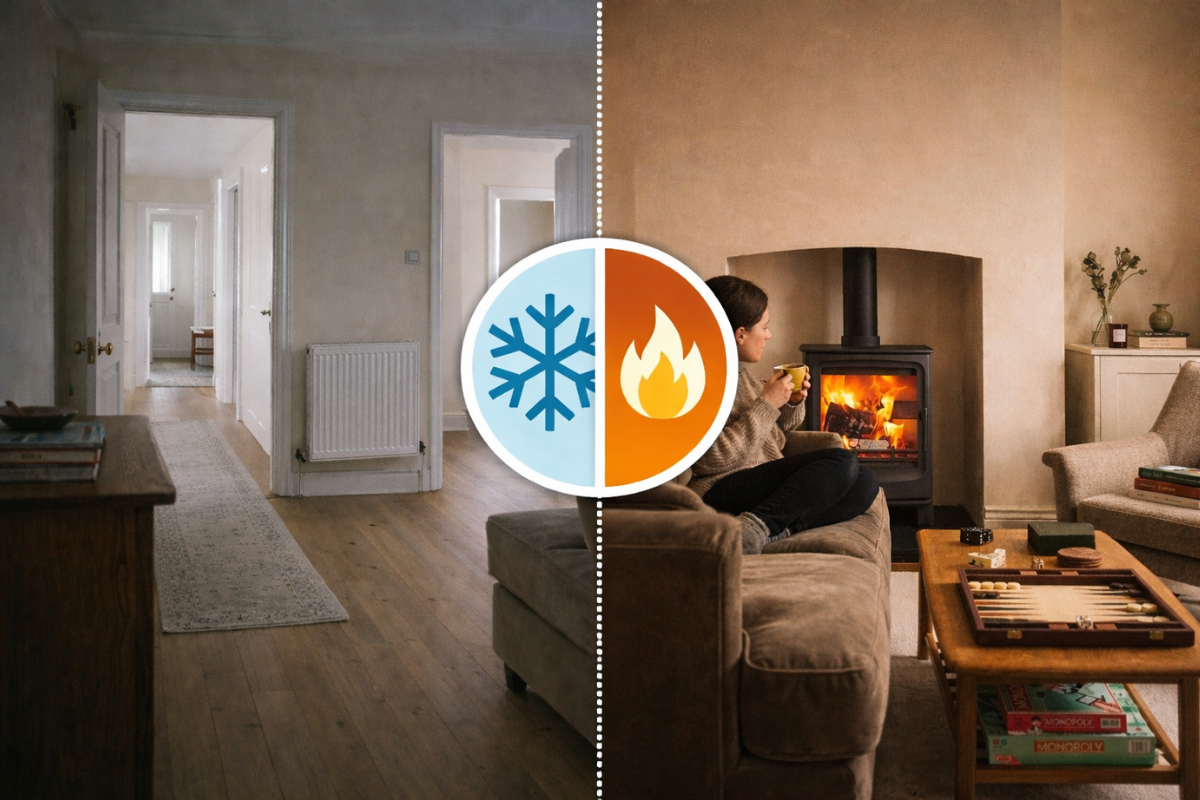
You can significantly reduce how much oil your system uses by changing how you heat your home — warming your main living space with a stove instead of relying on your central system to heat the entire home.
For many households, this can be one of the simplest ways to reduce oil usage without replacing their entire heating system.
🧠 Quick Answer: Can you reduce oil heating costs without switching systems?
✅ Yes — by:
- Heating fewer rooms more efficiently
- Using supplemental heating (e.g. wood-burning or multi-fuel stoves)
- Reducing reliance on full-system, whole-house heating
⚠️ Unlikely — if:
- You rely entirely on constant, whole-house heating all day
- You expect full-system results without any investment
🔑 Key Takeaways
- Volatility is the real enemy — unregulated oil markets mean sudden price spikes are the new normal
- Stop heating empty space — oil systems default to whole-house heating
- Zone heating works — heat the room you’re actually using
- Stoves offer stability — more control over day-to-day costs
- Reduce, don’t replace — keep oil for baseline, use alternatives where it matters
📍 Find what you need
Short on time? Here’s what actually helps reduce your oil usage.
- What is Zone Heating?
- Why Oil Heating Costs Are So Unpredictable
- The Core Problem with Oil Heating
- Reduce Reliance, Not Replace the System
- Using a Stove for Targeted Heating
- What About the Upfront Cost?
- Cost Comparison: Oil vs Solid Fuel
- How Much Could You Reduce Oil Usage?
- When This Approach Works
- What About Replacing Oil Heating Entirely?
- Other Ways to Reduce Oil Costs
- Taking Control of Your Heating Costs
- Your Top Questions Answered
What is Zone Heating?
Zone heating is the practice of heating only the rooms you are actively using, rather than running a central heating system to warm the entire home.
Why Oil Heating Costs Are So Unpredictable (2026 Context)
The extreme price volatility seen recently isn’t a fluke. In March 2026, heating oil prices more than doubled — and in some cases came close to tripling — rising from around 55–65p per litre to over £1.20 per litre in a matter of weeks — as reflected in UK heating oil price data and supplier reports during the March 2026 spike.
This was driven by severe geopolitical disruption around the Strait of Hormuz, which instantly inflated global shipping and insurance costs. In the UK, the heating oil market is not regulated by Ofgem. There is no price cap to smooth out these sudden shocks.
You’re not just paying more — you’re exposed to sudden spikes. When you need to fill your tank, you are largely at the mercy of that day’s spot price.
The Core Problem: Oil Heats Everything (Even When You Don’t Need It To)
The fundamental flaw with most domestic oil setups is that they provide whole-house heating by default.
When you feel a chill in the living room on a Tuesday evening, your thermostat fires up the boiler. That boiler then burns expensive oil to push hot water through the entire house — heating empty bedrooms, unused dining rooms, and hallways.
Even if you use thermostatic radiator valves (TRVs), the boiler is still firing and maintaining a baseline heat across a wide network. Running a massive system for short bursts of heat is incredibly inefficient.
💡 Worth knowing: You’re often paying to heat your entire home, even when you’re only using one or two rooms. Even small reductions in how often your boiler runs can make a noticeable difference over a full heating season.
The Smarter Approach: Reduce Reliance, Not Replace the System
The most practical way to cut costs isn’t to ditch oil entirely — it’s to use it less.
By focusing heat where you spend most of your time, you can keep your oil boiler for morning routines and hot water, while reducing how much you rely on it in the evenings.
Option 1: Use a Stove for Targeted Heating

Zone heating means generating heat only where you need it. By installing a stove in your main living space, you can comfortably heat the room you use most, instead of running your central heating to warm the whole house.
Because firewood and solid fuels are generally cheaper and more stable than oil for most UK homes, you take control of when and where your heating budget is spent.
You can buy logs locally or in bulk, completely bypassing the volatile oil market for your regular heating. This also gives you more control over when and how you buy your fuel.
If you want to heat one room without running your entire system, a stove is one of the most effective and practical options.
The goal isn’t to replace your oil heating — it’s to stop relying on it for everything. For most homes, that shift alone can noticeably improve both comfort and running costs.
💡 Worth knowing: This approach works best in homes where one main living space is used consistently, and where you can turn the central heating down without affecting essential areas like bedrooms or bathrooms.
What About the Upfront Cost?
Installing a stove does require an initial investment, and it’s worth being realistic about that.
For most homes, the total cost of a stove and installation can range from around £2,000 to £5,000 depending on the setup, chimney condition, and the type of stove you choose.
However, this isn’t a like-for-like comparison with a single oil refill. It’s an investment in how your home is heated long-term.
If you’re currently spending hundreds of pounds every time you fill your oil tank, the goal isn’t to replace that cost overnight — it’s to reduce how often you need to pay it.
💡 Worth knowing: For many households, using a stove more regularly — and reducing overall oil use — can help each tank last longer, offsetting the upfront cost over time.
If you’re planning ahead, installing a stove outside of peak winter demand can also help you avoid rushed (and expensive) decisions when prices spike.
👉 Upfront cost holding you back? Spreading the cost over time can make purchasing a stove more accessible — while reducing ongoing oil usage from day one. See our finance options.
Cost Comparison: Oil vs Solid Fuel
While exact costs fluctuate, the key differences remain the same. Rather than draining a single, expensive tank of oil just to stay warm in the evenings, wood-burning and multi-fuel stoves allow for controlled, predictable spending.
| Feature | Heating Oil | Solid Fuel (Wood / Smokeless) |
|---|---|---|
| Price Volatility | Extreme – tied to global events and shipping with no UK price cap. | Low – locally sourced, highly stable pricing year-round. |
| Cost per kWh | High – subject to sudden spikes that can double costs overnight. | Generally lower and more stable over time — offers a much more consistent baseline cost. |
| Purchasing Model | Bulk buying only — often requires £500–£1,000 per tank fill. | Flexible — buy as you go weekly, or bulk buy for winter savings. |
| Heating Style | Whole-house — often wastes fuel heating empty rooms and hallways. | Targeted heating — heat is concentrated where you actually need it. |
The key difference is the control. With oil, you’re reacting to the market. With a stove, you decide when and how you spend. That shift alone is what allows many households to stabilise their heating costs and reduce how often they need to rely on expensive oil refills.
👉 Learn more about managing stove fuel expenses: Read our guide to stove running costs.
How Much Could You Actually Reduce Oil Usage?

The exact reduction in your oil consumption depends on your home’s size, your insulation, and your daily habits.
However, a realistic scenario for many households is using the oil boiler for an hour in the morning to take the chill off the house and heat the water. Then, during evenings and weekends, you turn the thermostat down low, and heat your main living space with a stove.
💡 Worth knowing: By dropping the central thermostat to a low temperature and letting the stove do the heavy lifting in the room you’re in, households often notice a clear drop in how frequently their boiler fires up.
When This Approach Works
✅ This approach is a good fit if:
- You rely heavily on oil and are stressed by price spikes.
- You spend most of your evenings in one or two main rooms.
- You want more control over your day-to-day heating costs.
⚠️ This approach might not be ideal if:
- You have a sprawling home and require constant, whole-house heat in every room.
- You have no space to store logs or solid fuel, or you cannot manage the physical maintenance of a stove.
What About Replacing Oil Heating Entirely?
If you are looking to completely remove your oil boiler, boiler stoves are an option. You can connect these heavy-duty stoves directly to your radiators and hot water cylinder, allowing you to run your central heating entirely on wood or solid fuel.
However, these systems are expensive to install, require complex plumbing, and demand a lot of fuel and manual loading to heat a whole house. They’re an excellent choice if you want to invest in a long-term alternative whole-house heating solution, but a standard stove is all you need if you just want to reduce oil reliance.
Other Ways to Reduce Oil Costs
If you want to maximise your savings alongside targeted heating, consider these practical steps:
- Improve insulation: Stop the heat you pay for from escaping through the loft, windows, and doors.
- Use timers and zoning: Ensure your boiler is strictly timed to only fire when absolutely necessary. Turn radiators down to the frost setting in unused guest rooms.
- Reduce unnecessary heating cycles: Lower your boiler’s flow temperature slightly. This can help improve efficiency in some systems.
Taking Control of Your Heating Costs
The reality of the 2026 energy market is that off-grid homes are especially vulnerable. The unpredictability of oil prices and the lack of market regulation mean that relying on a single fuel source is a financial risk.
If you can’t switch systems, the next best move is reducing how much you use it — and that’s where the right setup can make a real difference.
Your Top Questions Answered
Do I need planning permission to install a wood-burning stove?
Generally, no. Installing a stove usually falls under Permitted Development in the UK, provided the flue installation meets Building Regulations, specifically Approved Document J. However, if you live in a listed building or conservation area, you should check with your local authority first.
Can I use a stove if I live in a UK Smoke Control Area?
Yes, but you must use a DEFRA-approved stove. You are also legally required to burn approved smokeless fuels or “Ready to Burn” certified wood with a moisture content of less than 20%.
Will reducing my oil usage cause the fuel in my tank to degrade?
It’s unlikely. Heating oil (kerosene) has a long shelf life and can typically sit in a well-maintained tank for 18 to 24 months without degrading. If you drastically reduce your usage and your oil sits for longer periods, consider using a fuel additive to help prevent sludge build-up and water contamination.
Is lighting a stove every evening a lot of hassle compared to just turning on the oil boiler?
It does require a small lifestyle shift, but modern stoves are designed to be very user-friendly. With dry, “Ready to Burn” wood and proper firelighters, you can usually get a fire producing significant heat within 10 to 15 minutes. For many households, that small daily effort is outweighed by the financial savings, the protection against oil price spikes, and the comfort of a real fire during the winter months.
Are stoves expensive to maintain?
No. The main recurring maintenance cost is an annual chimney sweep, which typically costs between £50 and £90 depending on your area. Over time, you may also need to replace minor consumable parts such as internal firebricks, stove glass, or the rope seal around the door. However, these parts are generally inexpensive and often easy to replace yourself. Compared with the cost of annual oil boiler servicing and potential breakdown repairs, stove maintenance is usually predictable and cost-effective.
Stop Paying to Heat Empty Space
If you’re tired of unpredictable oil costs, explore our range of stoves and take control of how you heat your home.
Not sure where to start?
- 👉 Browse wood burning stoves
- 👉 Explore multi-fuel stoves
- 👉 Shop budget-friendly stoves (under £500–£600)
- 👉 Read our wood-burning stove buying guide
- 👉 Read our multi-fuel stove buying guide
Prefer to speak to someone or visit in person?
- 📍 Visit us: Visit our showroom to compare wood-burning stove options in person.
- 📧 Get in touch: Contact our team for personalised advice based on your home, setup, and heating needs.
↑ Back to top | Jump to sections ↑