








Bioethanol vs Wood Burning Stoves: Which Is Right for Your Home?
⏱️ Time to read:
Key Takeaways
- Bioethanol stoves require no chimney, flue, or complex installation.
- Wood-burning stoves provide significantly higher heat output, capable of heating whole rooms.
- Bioethanol offers real flames but acts as a secondary heat source (1.5kW-3kW).
- Wood burners require HETAS installation, chimney maintenance, and fuel storage space.
- The Verdict: Choose bioethanol for flexibility and ambience; choose wood-burning for high heat performance and lower long-term fuel costs.
Wood Burning vs Bioethanol
There is nothing quite like the allure of a real flame. It transforms a house into a home, creating a focal point that draws people in. However, if you are in the market for a new stove, you are likely facing a common dilemma: Bioethanol or Wood Burning?
Both options offer the beauty of genuine, dancing flames – no fake LED screens here – but they serve very different purposes. One is a powerhouse of heat and tradition; the other is a master of convenience and modern flexibility.
In this guide, we strip away the jargon to give you a practical, no-nonsense comparison to help you decide which fuel type suits your property, your lifestyle, and your heating needs.
What is a Bioethanol Stove?

If you are new to this technology, think of a bioethanol stove as the ultimate ‘plug-and-play’ fire (without the plug). These stoves burn liquid bioethanol, a renewable alcohol produced by fermenting the sugars and starches in plant by-products.
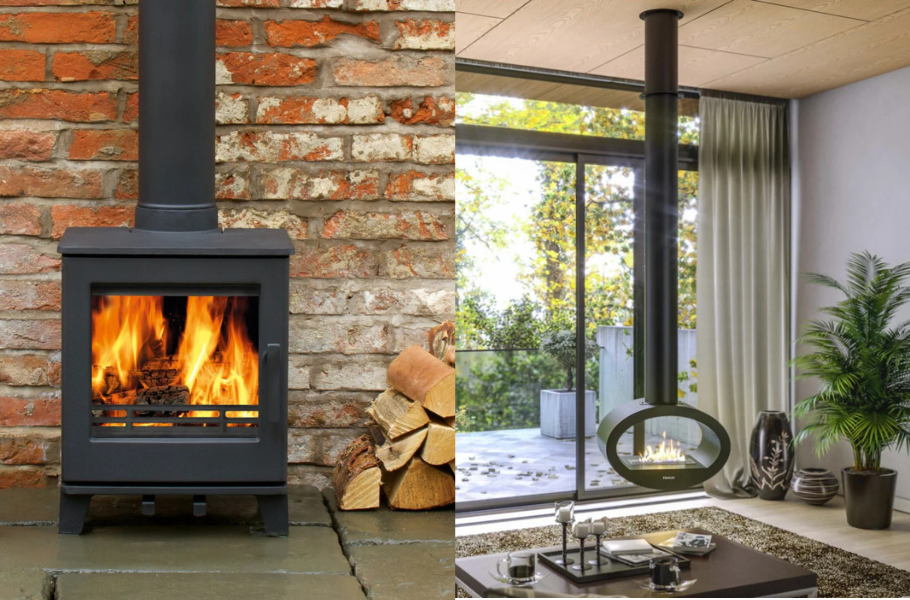
Because the fuel burns incredibly cleanly, there is no smoke, soot, or dangerous fumes. This means no chimney, flue, or gas connection is required. You can buy freestanding models that you simply place on the floor, or wall-mounted versions that hang like a picture. They are primarily designed for aesthetic appeal, offering a real flame with a supplementary boost of warmth.
👉 Explore our range: Bioethanol Stoves
What is a Wood Burning Stove?

A wood-burning stove is a solid-fuel appliance designed to burn seasoned wood. Unlike bioethanol, this is a serious heating machine. It relies on combustion air to burn wood at high temperatures, radiating intense heat into the room.
Because burning wood produces smoke and gases, these stoves strictly require a chimney or a flue system to vent emissions safely outside. In the UK, modern homes must comply with regulations to ensure they burn efficiently and cleanly. If you are looking to replace your central heating in a specific room, this is the traditional heavyweight champion.
👉 Explore our range: Wood-Burning Stoves | Multi-Fuel Stoves
Installation: What’s Involved?
The installation process is often the deciding factor for many homeowners, particularly those in flats or new builds.
Bioethanol Installation
- Complexity: Low
- Requirements: No flue, chimney, or external venting needed.
- Process: Most freestanding models require zero installation – just unbox and place. Wall-mounted models need basic DIY skills (drilling and fixing brackets).
- Ideal For: Renters, apartments, and homes without chimneys.
Wood Burning Installation
- Complexity: Moderate-high
- Requirements: A Class 1 chimney or a twin-wall flue system. You also need a non-combustible hearth.
- Process: Professional installation is strongly recommended. You should use a HETAS-registered installer to ensure compliance with UK Building Regulations (Document J).
- Ideal For: Period properties, renovations, and homeowners looking for a permanent heating solution.
Installation Comparison
| Feature | Bioethanol Stove | Wood Burning Stove |
| Chimney Required | ❌ No | ✅ Yes |
| Ventilation | Standard room ventilation | Dedicated air supply (often) |
| Professional Install | Not usually required | Highly recommended (HETAS) |
| Building Regs | Minimal | Strict compliance needed |
Heat Output: Which Actually Warms the Room?
This is where we need to be honest to help you make the right choice.
Wood Burning Stoves (The Heat Source)

A typical wood burner offers an output between 4kW and 8kW+. This is substantial. A 5kW stove is usually enough to heat a standard living room, often allowing you to turn off the central heating radiators in that space.
Bioethanol Stoves (The Ambient Source)

Bioethanol models typically output between 1.5kW and 3kW. To put that in context, an electric fan heater is usually 2kW. While they do produce heat, they are not designed to be the primary heat source for a large, cold room in mid-winter. They provide a cosy ‘top-up’ warmth and excellent ambience.
Running Costs & Fuel
Bioethanol:
- Fuel: Liquid bioethanol is sold in bottles (1l-5l)
- Burn Time: A 1-litre burner typically lasts 3 to 4 hours, depending on the flame setting.
- Cost: Generally more expensive per kilowatt of heat than wood. It is a ‘pay-as-you-go’ fuel – great for occasional evenings, but costly if used 8 hours a day, every day.
- Hidden Savings: No annual chimney sweep costs.
Wood-Burning:
- Fuel: Seasoned or kiln-dried logs.
- Burn Time: Variable, but logs burn slower and hotter.
- Cost: Buying wood in bulk is generally cost-effective. If you have access to free wood (that you season yourself), it is incredibly cheap.
- Hidden Costs: Annual chimney sweeping (£60 - £90) and periodic maintenance of door seals/bricks.
Maintenance & Ongoing Care
Bioethanol:
This is the low-maintenance dream. There is no ash to shovel, no soot on the glass, and no wood to chop. Maintenance usually involves a simple wipe-down of the burner box and, if any residue builds up, occasionally cleaning the glass.
Wood-Burning:

Owning a log burner is a lifestyle. You need to:
- Remove ash regularly.
- Clean the glass (though airwash systems help).
- Store logs in a dry place.
- Book an annual chimney sweep to prevent chimney fires and ensure draw efficiency.
Environmental Considerations
Bioethanol:
Bioethanol is a renewable energy source. It burns cleanly, producing only a small amount of carbon dioxide (roughly equivalent to burning two candles) and water vapour. There are no particulate matter (PM2.5) emissions, making it very friendly to local air quality.
Wood-Burning:
Wood is carbon neutral (trees absorb CO2 as they grow), but burning it releases particulates. However, modern Ecodesign stoves reduce emissions by up to 90% compared to older open fires. If you live in a Smoke Control Area, you must use a DEFRA-approved stove and authorised fuel.
Safety Considerations
Regardless of your choice, you are introducing a real, open flame into your home.
- Fire Guards: Essential for both types if you have children or pets.
- Fuel Storage: Bioethanol is highly flammable and must be stored safely away from the fire. Wood needs to be stored dry to prevent mould and ensure safe burning.
- Carbon Monoxide: While rare with bioethanol, it is good practice to have a CO detector. For wood burners, a Carbon Monoxide alarm is a legal requirement.
- Ventilation: Bioethanol fires consume oxygen, so the room must have adequate airflow.
Which is Best for Different Homes?

Not sure which category you fall into? Here are a few scenarios:
- 🏢 The City Apartment: Bioethanol. You likely have no chimney and strict leasehold rules preventing flue installation.
- 🏠 The Period Property: Wood Burner. If you have an existing chimney breast, a wood burner restores the heart of the home and utilises the existing architecture.
- 🏗 The New Build: Either. You can install a twin-wall flue for a wood burner (adding character to a new boxy room), or choose bioethanol for a sleek, modern look without building work.
- 🔥 The ‘Cold House’: Wood Burner. If your home is draughty or relies on expensive electric heating, a wood burner is a powerful primary heat source.
- ✨ The Interior Lover: Bioethanol. If you want the aesthetic of a fire for dinner parties or cosy Netflix nights but don’t want the hassle of logs, this is for you.
Pros & Cons Summary
| Feature | Bioethanol | Wood Burning |
| Real Flame | ✅ Yes | ✅ Yes |
| Heat Output | Moderate (Supplementary) | High (Primary) |
| Chimney Required | ❌ No | ✅ Yes |
| Installation | Simple / DIY | Complex / Professional |
| Maintenance | Low (Wipe down) | Moderate (Ash & Sweep) |
| Running Costs | Moderate | Variable (Low if buying bulk) |
| Best For | Modern homes / Renters | Long-term homeowners |
Final Verdict: Which Should You Choose?
The decision ultimately comes down to lifestyle vs. heating needs.
Choose a Bioethanol Stove for convenience, flexibility, and instant ambience without any building work. It is the perfect solution for modern living, where the ‘look’ is just as important as the warmth.
Choose a Wood Burning Stove if you want serious heating performance, traditional character, and the ritual of building a fire. It is an investment in your property that pays dividends in the form of heat output during the coldest months.
Still Undecided? Explore our full range to see which designs catch your eye.
👉 Shop Bioethanol Stoves | 👉 Shop Wood Burning Stoves
Frequently Asked Questions (FAQ)
Do bioethanol stoves heat a room properly?
Bioethanol stoves provide supplementary heat, typically between 1.5kW and 3kW. While they can take the chill off a room and provide a cosy warmth, they are not powerful enough to replace central heating or heat large, open-plan spaces entirely on their own.
Can you install a wood burner without a chimney?
Yes, you can. If your home does not have a traditional brick chimney, you can install a twin-wall flue system. This is a metal pipe that runs from the stove, either up through the roof or out through an exterior wall, to vent the smoke safely.
Are bioethanol stoves cheaper to run than wood?
Generally, no. Per kilowatt of heat produced, bioethanol fuel is more expensive than buying logs in bulk. Bioethanol is best suited for occasional use (evenings and weekends), whereas wood is more economical for daily heating over long periods.
Do wood-burning stoves add value to a house?
Yes, estate agents often cite wood-burning stoves as a desirable feature that can increase property value by up to 5%. They create a focal point and offer a functional secondary heating method that appeals to buyers seeking ‘hygge’ and character.
Are bioethanol stoves safe indoors?
Yes, when used according to the manufacturer's instructions. Because they do not produce dangerous levels of carbon monoxide or smoke, they do not need a chimney. However, you must ensure the room has adequate ventilation to replenish oxygen, and always handle the flammable fuel with care.
Which is more environmentally friendly?
Both have merits. Bioethanol is a renewable, plant-based fuel with zero particulate emissions. Modern Ecodesign wood stoves are carbon neutral and highly efficient, but they do emit some particulates. For strict air quality control in cities, bioethanol is cleaner; for a sustainable, off-grid heat source, wood is excellent.