








Heat Pumps vs Wood-Burning Stoves: Which Makes Sense for Your Home?
⏱️ Time to read:
The UK is in the middle of a heating revolution. With government grants pushing heat pumps and fluctuating energy bills making homeowners rethink how they stay warm, it is easy to get caught up in the hype. But before you rip out your boiler or invest thousands of pounds, you need to ask one crucial question: what actually works for your specific property?
The debate between heat pumps and wood-burning stoves isn’t just about technology; it’s about the reality of UK housing. With millions of us living in draughty Victorian terraces, 1930s semis, or rural cottages, the “best” heating solution on paper might not be the best one for your living room. Let’s cut through the jargon and look at which option makes practical, financial, and everyday sense for you.
🧠 Quick Answer: Is a wood burner or heat pump best for my home?
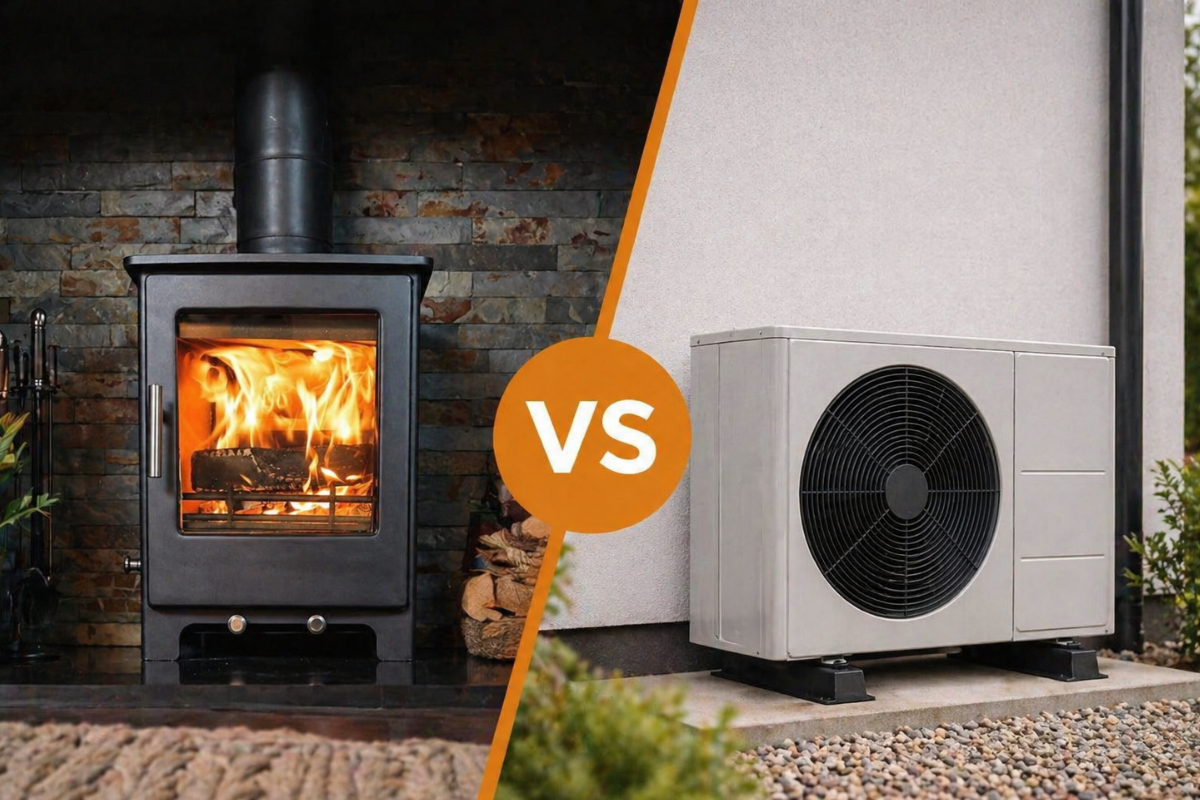
If you want the immediate verdict: Heat pumps are a good choice for well-insulated homes, new builds, and homeowners looking for a complete, long-term central heating system replacement. Wood-burning stoves also work well in new and well-insulated homes, but are the best solution for older or poorly insulated UK homes, providing powerful supplementary heating and fast, room-focused warmth exactly where you spend the most time.
🔑 Key Takeaways
- Upfront costs: Wood-burning stoves are significantly cheaper to buy and install compared to the high initial investment of a heat pump.
- Running costs: Heat pumps are highly efficient for continuous whole-house heating, while stoves excel at low-cost, targeted room heating.
- Home suitability: Heat pumps require excellent insulation to function effectively; stoves work brilliantly in older, draughty UK properties as well as well-insulated homes.
- Heating style: Heat pumps provide low, constant background heat across the whole house, stoves offer fast, intense, and cosy room-focused warmth.
- Installation: Stoves can typically be installed in a day or two with minimal disruption, whereas heat pumps often require new, larger radiators and upgraded pipework.
- The deciding factor: Choose a heat pump to completely replace your central heating system, choose a wood-burning stove to enhance your current setup and reduce reliance on your main boiler.
📍 Find what you need
Short on time? Jump straight to the comparison that matters for your home.
Side-by-Side Comparison
| Feature | Air Source Heat Pump | Wood-Burning Stove |
|---|---|---|
| Upfront Cost (Installed) | £7,000–£15,000+ (before grants) | £1,500–£4,000 |
| Running Costs | Highly efficient, but tied to electricity prices | Fuel-based; highly cost-effective for zonal heating |
| Installation Complexity | High (often requires new radiators/pipework) | Low to Medium (requires a flue/chimney sweep) |
| Best Home Types | New builds, highly insulated modern homes | Older homes, period properties, off-grid homes |
| Heating Style | Whole-house, constant background heat (low flow) | Targeted, fast, high-temperature room heating |
When a Heat Pump Makes Sense
A heat pump is a fantastic piece of technology, but it requires the right environment to thrive. It makes the most sense if:
- You live in a new build or highly insulated home: Heat pumps operate at lower flow temperatures than traditional boilers. To keep the house warm, the property must be able to retain that heat without draughts.
- You are doing a full heating system replacement: If your boiler is dead and you are ready to completely overhaul your home’s heating infrastructure (including upgrading radiators and pipework), a heat pump is a future-proof choice.
- You have a long-term investment mindset: While the upfront cost is high, access to government grants (like the Boiler Upgrade Scheme) and the long-term efficiency of the system can make it a worthwhile investment over a 15–20 year period.
When a Wood-Burning Stove Makes More Sense

For a vast number of UK homeowners, a heat pump simply isn’t practical without spending tens of thousands of pounds on retrofitting insulation. A wood-burning stove is often the smarter, more realistic choice if:
- You live in an older or poorly insulated UK home: Stoves produce high-intensity radiant heat. If your home is draughty, a stove will successfully heat the room you are in, whereas a heat pump will struggle to keep up with the heat loss.
- You want supplementary heating: You don’t necessarily need to rip out your existing gas or oil boiler. A stove works perfectly alongside your current system to provide a massive boost of heat exactly when you need it.
- You focus on heating one main living space: Most of us spend our evenings in just one room. Firing up a stove allows you to turn down the central heating thermostat for the rest of the house, saving significant money.
- You want to reduce reliance on central heating: With fluctuating energy prices, having an independent, off-grid heat source gives you control over your winter bills.
👉 Looking for flexibility in your fuel choices? You may also want to explore our range of multi-fuel stoves, which allow you to burn smokeless coal as well as wood.
What Type of Home Do You Have?
The architectural style and age of your property will heavily dictate which heating solution makes sense for your specific home, budget, and usage pattern.
Victorian / Edwardian Terrace
🏆 Best Option: Wood-Burning Stove
Why: These beautiful period properties are notoriously difficult to insulate. Solid brick walls and suspended timber floors mean heat escapes quickly. The high-temperature output of a stove easily overcomes these draughts, turning a chilly living room into a cosy sanctuary without the need for a deep-retrofit insulation project.
👉 Struggling with a cold living room?
Explore wood-burning stoves designed for older homes that deliver powerful, room-focused heat.
1930s Semi-Detached
🏆 Best Option: Wood-Burning Stove (or a mix)
Why: While slightly better insulated than Victorian homes, 1930s semis still suffer from heat loss. A stove in the main lounge is usually the most cost-effective way to improve comfort. If you have recently renovated and added cavity wall insulation and modern double glazing, a heat pump could work — but a stove remains the easiest way to add immediate warmth.
👉 Looking for a quick comfort upgrade?
Discover stoves that can transform your main living space without a full heating overhaul.
Rural / Off-Grid Homes
🏆 Best Option: Wood-Burning Stove / Multi-Fuel Stove
Why: Homes off the gas grid are often exposed to the elements and prone to power cuts. A wood-burning stove provides guaranteed, independent heat that requires zero electricity. It is the most reliable heat source for rural living.
👉 Need reliable heat you can depend on?
See multi-fuel stoves built for off-grid living and consistent performance in all conditions.
New Builds
🏆 Best Option: Heat Pump (with an optional wood-burning stove)
Why: Modern building regulations require new homes to be practically airtight with exceptional insulation. This is the exact environment where a heat pump thrives, providing efficient, low-level heat to the entire property all day long.
However, many homeowners choose to install a wood-burning stove alongside their new system. This alternative path allows the heat pump to handle steady background warmth, while the stove provides a fast, cosy boost of heat for evenings in the main living space.
👉 Adding a stove to a modern home?
Explore Ecodesign stoves that complement heat pumps and provide fast, efficient top-up heat.
Cost Breakdown: Upfront Investment vs Real-World Running Costs
When comparing costs, it is vital to look at how you actually live and heat your home.

Upfront Costs
- Heat pumps: The initial outlay is high. A typical air source heat pump installation ranges from £7,000 to £15,000+. Even with government grants, you may need to factor in the hidden costs of upgrading to larger radiators and improving your home’s insulation.
- Wood-burning stoves: Stoves are highly accessible. A typical installation (including the stove, flue liner, and labour) ranges from £1,500 to £4,000. You can read our comprehensive installation guide to understand exactly what is involved.
Running Costs
Heat pumps are incredibly efficient, often producing 3 to 4 units of heat for every 1 unit of electricity used. However, electricity is currently more expensive than gas or bulk-bought wood.
The real cost difference comes down to behaviour. Heat pumps are designed to heat the whole house slowly and constantly. Stoves are designed for targeted heating. If you only use your living room in the evenings, paying to run a heat pump to warm empty bedrooms doesn’t make sense.
👉 Want to save money on heating? Our guide on heating one room vs the whole house explores how zonal heating with a stove can cut your winter energy bills.
Do You Need to Replace Your Heating System — or Just Improve It?
This is the most important question to ask yourself.
A heat pump is a full system replacement. It requires a commitment to changing how your home is heated, often involving moderate to heavy disruption during installation. It’s a fantastic choice if you are doing a major renovation on a well-insulated property.
A wood-burning stove is a targeted improvement. It enhances your home’s comfort without replacing your existing system. It puts you in control of your immediate environment, providing fast, cost-effective heat exactly where you want it.
💡 Worth Knowing: You don’t necessarily have to choose just one. Many homeowners are now using a wood-burning stove alongside a heat pump, relying on the heat pump for background warmth and the stove for intense evening heat.
Frequently Asked Questions
Are heat pumps worth it in the UK?
Yes, but primarily if your home is well-insulated. If you live in a draughty, older property, a heat pump will struggle to keep the house warm and will cost a lot to run unless you invest heavily in insulation first.
Can a wood-burning stove heat a whole house?
While stoves are primarily designed to heat the room they are in (zonal heating), leaving internal doors open allows the heat to naturally rise and circulate, significantly warming adjacent rooms and hallways. However, they are best used as powerful supplementary heaters rather than whole-house central heating replacements.
Are wood-burning stoves being banned?
No, wood-burning stoves are not being banned in the UK. The government has phased out the sale of highly polluting wet wood and house coal, and all new stoves must now meet strict Ecodesign emissions standards. Modern Ecodesign stoves are highly efficient and perfectly legal to install and use.
Which is cheaper to run?
It depends on your usage. A heat pump is more cost-effective if you need to keep a well-insulated 4-bedroom house at a constant 20ºC all day. A wood-burning stove is cheaper if you just want to quickly heat your living room to a cosy 23ºC for a few hours in the evening while leaving the rest of the house cooler.
Turn Down the Thermostat, Turn Up the Comfort
Ultimately, the choice between a heat pump and a wood-burning stove comes down to the reality of your property and how you actually live in it. If you are undertaking a major renovation on a highly insulated home and want a complete central heating overhaul, a heat pump is a brilliant long-term investment.
But if you live in a typical UK property and want a fast, cost-effective way to improve your comfort — without the massive upfront costs or disruption — a wood-burning stove is the clear winner. It allows you to turn down the main thermostat, reduce your reliance on expensive central heating, and bring a reliable source of warmth into the heart of your home.
Don’t spend another winter paying to heat empty rooms when you could be enjoying targeted, high-efficiency warmth exactly where you need it most.
Take the next step today:
- 👉 Find your perfect match: Browse our extensive range of high-efficiency wood-burning stoves and versatile multi-fuel stoves.
- 👉 Plan your upgrade: Let us handle the hard work. Visit our installation page to arrange a professional fitting through our expert team and see just how easy it is to transform your living space.
You might also like:
- 👉 Wood-burning stove buying guide
- 👉 How to heat the room you use the most
- 👉 Wood burners vs central heating
- 👉 What happens after you buy a stove?
- 👉 How to have a wood-burning stove without a chimney
- 👉 Building regulations for stoves explained
- 👉 Guide to wood-burning stove installation
- 👉 Can you use a wood-burning stove with a heat pump?
Need more advice or prefer browsing in person?
- 📍 Visit us: Browse a selection of wood-burning and multi-fuel stoves and get expert advice at our showrooms
- 📧 Get in touch: Contact our team for advice on choosing the right stove, delivery questions, installation bookings, or finance queries
↑ Back to top | Jump to sections ↑