








What Happens After You Buy a Stove? Delivery, Installation & First Use Explained
⏱️ Time to read:
You’ve spent hours researching heat outputs, comparing styles, and finally choosing the perfect stove for your home. It is an exciting purchase, but it is completely normal to feel a sudden wave of hesitation right before — or just after — you click “buy”.
How does a 100kg cast iron box actually get into my living room? Will the installation ruin my carpet? What if I don’t know how to use it correctly?
Uncertainty about what happens next is the number one reason people delay upgrading their heating. But the truth is, the process is incredibly straightforward once you know exactly what to expect.
This guide walks you through the honest, real-world reality of stove delivery and installation in the UK, so you can move forward with total confidence.
🧠 Quick Answer: What happens after buying a wood-burning stove?
If you are short on time, here is the standard timeline of events:
- Order confirmation: You receive your receipt and a delivery date is scheduled.
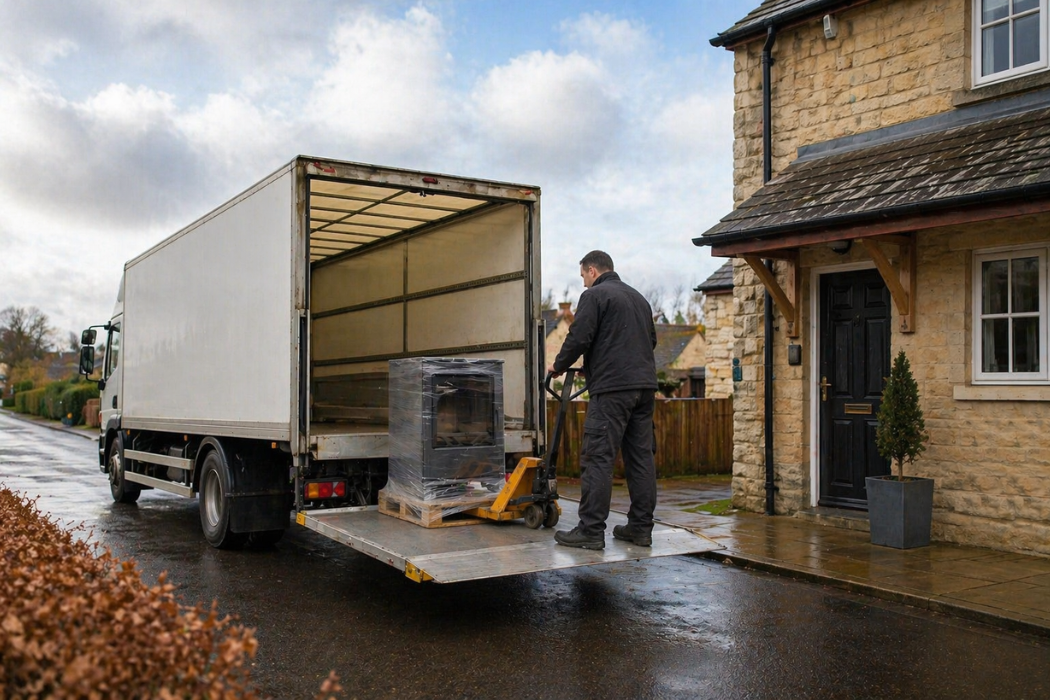
- Kerbside delivery: The stove arrives secured to a wooden pallet and is dropped off at the nearest safe point outside your property.
- Pre-install preparation: You clear the room and ensure the chimney has been swept.
- Professional installation: A certified installer fits the stove, hearth, and flue system.
- First use (curing): You light a series of small, controlled fires to cure the stove paint, which gives off a temporary (but completely normal) smell.
🔑 Key Takeaways
- It’s a straightforward process, but it requires preparation: You will need to arrange help to move the stove indoors and clear space for the installers.
- Installation times vary: A simple swap takes half a day; a new flue system or fireplace knock-out can take one to two days.
- Some disruption is normal: Expect a little noise and dust on installation day.
- First use involves a temporary smell: The paint needs to cure, which produces a harmless odour and light smoke.
- Professional installation is essential: Using a competent person (like a HETAS-registered engineer) ensures your stove is safe, legal, and operates efficiently.
📍 Jump to section
Not sure what actually happens after you buy? Jump straight to the part you’re worried about.
The Step-by-Step Journey
Step 1: From order to delivery

Once your order is placed, the first major milestone is delivery. Stoves are incredibly heavy — often weighing anywhere from 70kg to over 150kg. Because of strict health and safety regulations for couriers, delivery methods are very specific.
- Expectation: Two delivery drivers carefully carry the stove into your living room and gently place it on your hearth.
- Reality: Stoves are delivered via a pallet network. The driver will use a pump truck to wheel the pallet to the nearest flat, hard, and accessible point outside your property (known as “kerbside delivery”). Pallet trucks cannot move over gravel, grass, or steep inclines.
- What you need to do: You will need to arrange for at least two strong, capable people to unbox the stove, lift it off the pallet, and carry it inside your home. Alternatively, many people leave the stove in a secure garage until the installer arrives to help move it.
💡 Worth Knowing: If you will struggle with kerbside delivery, we offer an optional “two man” delivery service for an additional fee. This involves carrying the stove into a room of your choice.
Step 2: Preparing for installation
Before your fitter arrives, a little preparation goes a long way in protecting your home and speeding up the process.
- Clear the space: Remove rugs, soft furnishings, and fragile ornaments from the room. Move furniture as far back as possible.
- Chimney sweeping: If you are using an existing chimney, it must be swept by a professional before a liner can be dropped down.
- Check your hearth: Ensure your hearth meets the required building regulations (your installer will have checked this during their initial survey).
👉 Still figuring out the regulations for your specific setup? Check out our comprehensive installation guide to see exactly what is required for your home.
Step 3: Installation day

In the UK, it is highly recommended (and legally required, unless you want to pay for local building control sign-off) to use a HETAS-registered installer.
- Expectation: A silent, spotless process that takes an hour.
- Reality: Installing a stove is construction work. It involves drilling, moving heavy metal, and working with soot.
A standard installation — where a liner is dropped down an existing chimney and connected to the stove — usually takes about half a day to a full day. If your installer needs to knock out brickwork to widen a fireplace or install a twin-wall flue system from scratch, expect it to take one to two days.
Good installers will lay down heavy-duty dust sheets to protect your flooring, but you should still expect a small amount of airborne dust and noise.
👉 Haven’t booked a fitter yet? You can learn more about finding the right professional on our installation services page.
Step 4: First use (The curing process)

The installers have packed up, your living room is clean, and you are ready for your first cosy evening. But using a stove for the first time comes with a very specific requirement: curing the paint.
When a stove is manufactured, it is coated in high-temperature paint. This paint remains slightly soft until it is heated up and “baked” onto the metal.
- The curing smell: During your first few fires, the paint will cure. This produces a distinct, chemical-like smell and sometimes a light haze in the room. This is completely normal and not a fault with your stove.
- Ventilation: Open all the windows and doors in the room during your first few fires to let the smell escape.
- Start small: Don’t build a roaring fire on day one. Start with a small fire made only of kindling. Let it die down, then build a slightly larger fire the next time. This gently tempers the cast iron or steel and prevents the metal from warping or the paint from peeling.
- Mastering airflow: Modern stoves are highly efficient. It will take a few tries to learn exactly how your specific air vents respond. Be patient with yourself.
What Might Surprise You (A Reality Check)

We believe in complete honesty because we want you to be thrilled with your final setup. Here are a few things that often catch new buyers off guard:
- Older homes can throw curveballs: If your home is older, opening up a fireplace might reveal hidden lintels, damp rubble, or a chimney that isn’t completely straight. This can occasionally delay installation by a few hours.
- Minor mess is unavoidable: Even the cleanest installers can’t stop a bit of soot or brick dust from floating in the air. Keep your soft furnishings covered.
- The first fire smell can be strong: Some people panic and think their stove is leaking smoke. It is almost always just the paint curing. It passes after 2 to 3 uses.
- You will get warm very quickly: It sounds obvious, but modern stoves are incredibly efficient. You may find yourself leaving the living room door open to let the heat travel through the house!
Frequently Asked Questions
How long does stove installation take in the UK?
A straightforward installation into an existing, prepared fireplace usually takes 4 to 8 hours. Complex installations, such as building a false chimney breast or installing a twin-wall flue, typically take 1 to 2 days.
Do I need to be home for delivery?
Yes. Because the stove is delivered on a pallet via a large lorry, you must be present to sign for the delivery and ensure the driver can safely place the pallet on your driveway or path.
Can I use my stove straight away?
Yes, but you must start small. Your first 2 to 3 fires should be small and controlled to allow the high-temperature paint to cure and the metal to temper without warping.
Will installation damage my home?
No. Professional installers use heavy-duty floor protection and dust sheets. However, because it is a minor construction job, a small amount of dust is normal. Moving fragile items out of the room beforehand is highly recommended.
Ready for a Warmer Home?
You’ve done the research, measured your space, and now you know exactly what happens after you click “buy”. The fear of the unknown shouldn’t stand between you and the comfort of a real fire.
Yes, the stove is heavy, and installation day will bring a little dust — but that minor, one-off disruption is a very small price to pay for decades of reliable heat, lower energy bills, and cosy winter evenings.
The process is straightforward, and the results are transformative. You know what to expect — now it’s time to make it happen.
What’s your next step?
- 👉 Find your perfect match: Browse our full collection of highly efficient wood-burning and multi-fuel stoves to find the right style for your room.
- 👉 Plan the fit: Need to sort out the technical side? Head over to our installation services page to get your project moving safely and legally.
You might also like:
- 👉 Wood burning stove buying guide
- 👉 How to have a wood-burning stove without a chimney
- 👉 Building regulations for stoves explained
- 👉 Guide to wood-burning stove installation
- 👉 Wood burning vs central heating comparison
- 👉 Why spring and summer are the best times to install a stove
Need advice or prefer browsing in person?
- 📍 Visit us: Browse a collection of wood-burning and multi-fuel stoves in action, and get personalised advice at our showrooms
- 📧 Get in touch: Have a specific question about your chimney or hearth? Our expert team is on hand to give you honest, no-nonsense advice. Contact us today and let’s get your home winter-ready.
↑ Back to top | Jump to sections ↑