








Wood Fired Pizza Tips: How to Get Perfect Results Every Time
⏱️ Time to read:
Forget soggy takeaways and lukewarm delivery boxes. If you want a proper, blistered crust and that distinct smoky flavour, you need to cook with real fire.
Bringing a wood-fired pizza oven into your garden completely changes how you cook and eat outdoors. But getting that authentic pizzeria quality at home takes more than just lighting a log and throwing in some dough. It requires the right temperature, the right ingredients, and a bit of technique.
Whether you are firing up a brand-new garden oven or trying to perfect your dough recipe, this guide covers exactly what you need to know to stop burning your crusts and start baking incredible wood-fired pizzas.
🧠 Quick Answer: How do I make the perfect wood-fired pizza at home?
To make the perfect wood-fired pizza at home, you need an oven floor temperature of at least 400–450°C (750–850°F), a slow-fermented dough using high-protein “00” flour, and dry, seasoned hardwood. Preheat your pizza oven for 30 to 45 minutes, keep your toppings light to avoid a soggy centre, and use a turning peel to rotate the pizza every 15–20 seconds for an even, perfectly blistered crust.
🔑 Key Takeaways
- Heat is everything: Invest in a quality pizza oven and an infrared thermometer to ensure your cooking surface hits the sweet spot of 400–450°C (750–850°F).
- Patience pays off: Cold-fermenting your dough for 24 to 48 hours dramatically improves flavour, texture, and crust blistering.
- Fuel matters: Only use kiln-dried hardwoods (like oak or ash) with a moisture content below 20% for a clean, hot burn.
- Less is more: Overloading your pizza with sauce and toppings is the number one cause of a soggy base.
- The right tools: A good launching peel, a turning peel, and a high-heat oven are non-negotiable for consistent, pizzeria-quality results.
📍 Find what you need
Short on time? Jump straight to the part that will improve your pizza fastest.
- The Essential Equipment for Homemade Pizza
- Mastering Wood-Fired Pizza Dough
- Choosing the Right Fuel and Controlling the Heat
- Sauce, Cheese, and Toppings: The Golden Rules
- Step-by-Step: How to Cook Pizza in a Wood-Fired Oven
- Common Wood-Fired Pizza Mistakes
- Recommended Products for Pizza Perfection
- When to Upgrade Your Pizza Oven
- Wood-Fired Pizza FAQs
- Fire Up Your Own Garden Pizzeria
The Essential Equipment for Homemade Pizza

Before you can master the technique, you need the right setup. While you can hack a domestic oven, nothing replicates the intense, rolling heat of a true wood-fired setup.
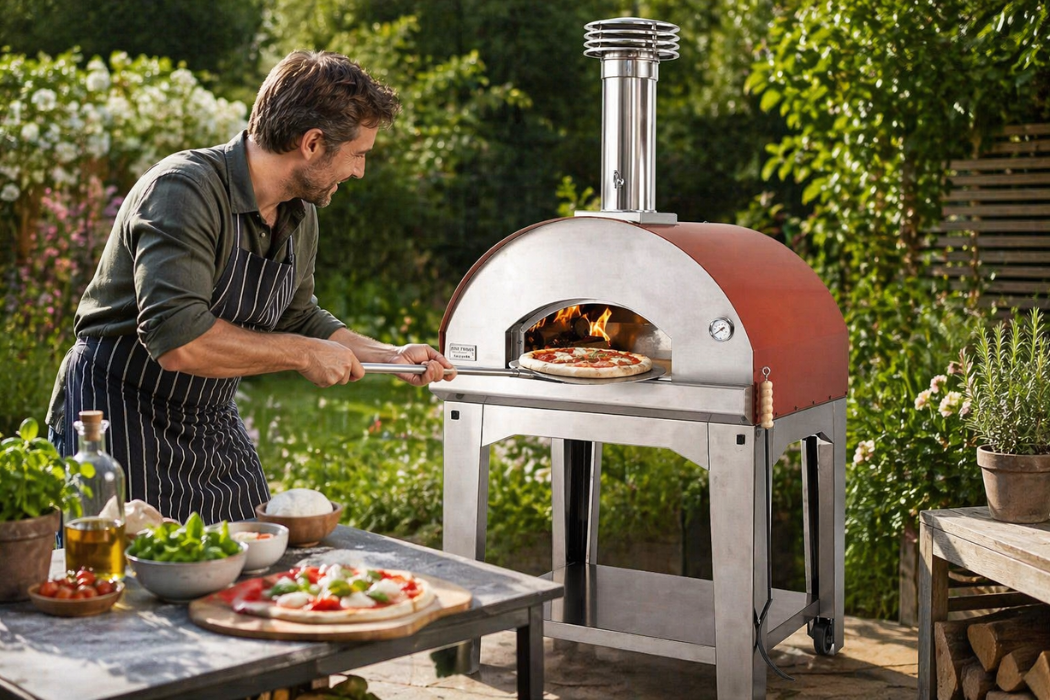
- Outdoor pizza ovens: A dedicated wood-fired oven is the gold standard. Built with refractory materials (like brick, clay, or stone), these ovens absorb and radiate heat, cooking a pizza in just 60 to 90 seconds.
- Tabletop pizza ovens: If you have limited garden space, a tabletop pizza oven is a brilliant, highly effective alternative. They heat up quickly and deliver incredible results without a massive footprint.
- Essential accessories: You can’t cook wood-fired pizza safely or effectively without the right pizza oven accessories. You'll need a wooden or perforated metal launching peel (to get the pizza in), a smaller turning peel (to rotate it while cooking), and an infrared thermometer (to check the floor temperature).
👉 Ready to get started? Browse our full range of wood-fired pizza ovens to find the right size and style for your garden setup.
👉 Short on space? Explore our tabletop pizza ovens for compact, high-performance options.
Mastering Wood-Fired Pizza Dough
The dough is the foundation of your pizza. Achieving that perfect balance of a crispy base and a chewy, airy crust (the cornicione) requires a little science and a lot of love.
- Flour selection: Ditch the all-purpose flour. Opt for finely milled Italian “00” flour or a high-quality, high-protein bread flour. The higher gluten content provides the elasticity needed for a chewy, airy crust.
- Proper kneading: Knead your dough until it passes the “windowpane test” (where you stretch a small piece until it’s translucent without tearing). This usually takes 10–15 minutes by hand or 8 minutes in a stand mixer.
- Cold fermentation: This is the secret of the pros. After kneading, let your dough proof in the fridge for 24 to 48 hours. This slow fermentation breaks down complex starches, resulting in a deeper flavour, better digestion, and those beautiful dark blisters on the crust.
- Stretching (Never roll!): Bring your dough to room temperature for 1–2 hours before stretching. Never use a rolling pin — it pushes all the air out of the dough. Instead, use your hands to gently press the air outward from the centre to the edges, creating a natural crust.
Choosing the Right Fuel and Controlling the Heat

To cook pizza, an outdoor wood-fired pizza oven uses the intense heat of burning wood from both the bottom up (conduction from the stone) and the top down (radiant heat from the flames).
- Moisture level: Always use wood with a moisture level below 20%. Look for the “Ready to Burn” logo. Kiln-dried wood is essential; wet wood will smoulder, produce thick black smoke, and fail to reach the necessary temperatures.
- Wood type: Hardwoods like oak, ash, beech, or birch are best. They burn hotter and longer than softwoods. Avoid treated woods, as they release toxic chemicals that will ruin your food.
- Managing the flame: You want a “rolling flame” that arcs over the interior dome of the oven. This cooks the top of the pizza while the hot stone crisps the base.
💡 Worth Knowing: Your oven floor matters more than the air temperature. Even if your oven “feels” hot, your pizza won’t cook properly unless the stone floor is fully heat-soaked. Always measure the centre of the floor — not the air — before launching.
Sauce, Cheese, and Toppings: The Golden Rules
When it comes to authentic wood-fired pizza, restraint is your best friend.
- Sauce simplicity: Authentic Neapolitan sauce isn’t cooked beforehand. Simply crush high-quality tinned tomatoes (like San Marzano), add a pinch of sea salt, and perhaps a dash of olive oil. The intense heat of the oven will cook the sauce perfectly on the dough.
- The right cheese: Fresh mozzarella (Fior di Latte) is traditional, but it holds a lot of water. To prevent a soggy pizza, tear your fresh mozzarella into pieces and let it drain in a sieve over a bowl for a few hours before using. Alternatively, use a high-quality low-moisture mozzarella.
- Topping ratios: Keep it light. A heavy pizza won’t launch off the peel properly and will struggle to cook through the middle. Choose 2 or 3 high-quality ingredients (like cured meats, fresh basil, or thinly sliced vegetables).
Step-by-Step: How to Cook Pizza in a Wood-Fired Oven

- Preheat thoroughly: Light your fire 30 to 45 minutes before cooking. Use your infrared thermometer to check the centre of the oven floor. You are looking for a temperature between 400–450°C (750–850°F).
- Prep the peel: Lightly dust your launching peel with semolina flour (it acts like tiny ball bearings, preventing sticking better than regular flour).
- Build fast: Stretch your dough, place it on the peel, and add your toppings quickly. The longer wet dough sits on a peel, the more likely it is to stick. Give the peel a gentle “shimmy” to ensure the dough is loose.
- Launch with confidence: Slide the peel into the oven and use a confident, swift pull-back motion to drop the pizza onto the hot stone.
- Turn frequently: The side of the pizza facing the fire will cook incredibly fast. After about 20 seconds, the base should be set enough to slide your turning peel underneath. Rotate the pizza a quarter-turn every 15 seconds until evenly blistered.
- Rest and serve: Remove the pizza, let it rest for 30 seconds on a wire rack so the base stays crispy, slice, and enjoy.
💡 Worth Knowing: The first 20 seconds decide everything. Once your pizza hits the oven, the base sets within seconds. If your oven isn’t hot enough at this moment, you’ll never recover a crispy crust — no matter how long you cook it.
Common Wood-Fired Pizza Mistakes (And How to Fix Them)
Even seasoned home chefs run into issues. Here’s how to fix the most common problems:
❌ Mistake: The pizza is stuck to the peel.
✅ The Fix: Ensure your dough isn’t too wet, use semolina dust on the peel, and build your pizza quickly. Always give the peel a quick shake before walking to the oven to ensure it’s sliding freely.
👉Pizza keep sticking or tearing? A proper pizza peel makes launching and turning far easier.
❌ Mistake: The crust is burnt, but the base is raw.
✅ The Fix: Your fire is too big, but your oven floor hasn’t absorbed enough heat yet. Preheat the oven for longer. Push the fire to the back or side, and rely on the heat radiating from the stone.
👉 Struggling to judge heat? Use an infrared thermometer to get an instant, accurate reading of your oven floor temperature.
❌ Mistake: The centre of the pizza is a soggy mess.
✅ The Fix: You used too much sauce, too many toppings, or wet mozzarella. Drain your cheese beforehand and use a lighter hand when topping.
❌ Mistake: The dough is dense and heavy.
✅ The Fix: You likely didn’t let the dough ferment long enough, or you used a rolling pin and crushed the air bubbles. Switch to a 24-hour cold ferment and stretch by hand.
💡 Worth Knowing: Turning early prevents burning. Most beginners wait too long to turn their pizza. In a wood-fired oven, one side cooks far faster — start rotating as soon as the base sets (~20 seconds) to avoid scorching.
Recommended Products for Pizza Perfection
If you are ready to upgrade your garden setup, here are a few standout pizza ovens that we highly recommend for achieving professional results at home:
🔥 Product examples:
- Best for small gardens & compact spaces: DeliVita Wood-Fired Outdoor Oven
- 🫶 Why we love it: If you want a portable, beautifully designed oven that doesn’t compromise on performance, the DeliVita is a fantastic choice. Available in multiple colours (such as Jubilee Blue, Emerald Green, and Chilli Red), this fibreglass and clay oven heats up in just 25 minutes and weighs only 30kg, making it perfect for tabletop use.
- Best all-in-one outdoor cooking setup: Morsø Forno Deluxe Outdoor Oven Set
- 🫶 Why we love it: Constructed from double-coated cast iron, this stunning Danish-designed oven acts as a pizza oven, BBQ, and smoker all in one. The Deluxe set includes everything you need to get started, from a Tuscan grill to a professional pizza peel and an outdoor table.
- Best for outdoor kitchens & built-in setups: Fontana Margherita Built-In Wood-Fired Pizza Oven
- 🫶 Why we love it: Meticulously designed in Italy, the Fontana Margherita is perfect for those building a bespoke outdoor kitchen. It features heavy-duty stainless-steel construction and a classic vaulted design for rolling flames and exceptional heat distribution. Available in Anthracite, Rosso, or Stainless Steel.
When to Upgrade Your Pizza Oven

We all have to start somewhere. Maybe you kicked off your pizza-making journey with a basic ceramic stone on the BBQ, or a budget-friendly entry-level oven. But as your dough skills improve, your equipment needs to keep pace.
Here are the clearest signs that it is time to invest in a premium wood-fired oven:
- You are waiting too long between pizzas: Budget ovens notoriously lack insulation. If you cook one pizza and then have to wait 15 minutes for the stone to get back up to 400°C, hosting becomes a chore. A high-quality oven with proper refractory brick or thick ceramic insulation retains heat, letting you fire out pizzas back-to-back.
- You want to cook more than just pizza: If you are eyeing up wood-roasted lamb shoulders, charred whole fish, or overnight sourdough bread, a basic tabletop model won't cut it. You need an oven with a taller dome and superior heat retention — like the Morsø Forno — to handle low-and-slow cooking.
- Your current setup is falling apart: Cheap metal rusts, and thin stones crack under intense heat. If your current oven is looking worse for wear after just one or two winters, it is time to upgrade to weather-resistant materials like marine-grade stainless steel, cast iron, or fibreglass.
- You are building a proper outdoor kitchen: If you are redesigning your garden, a rusty portable oven on a wobbly folding table ruins the aesthetic. Upgrading to a built-in model, like the Fontana Margherita, gives your outdoor space a permanent, professional focal point.
- You need more space: Making one 10-inch pizza at a time is fine for a couple, but it is a nightmare when you have ten hungry guests waiting. Upgrading to an oven with a larger internal floor allows you to cook multiple pizzas at once, or manage a fire on one side while roasting a tray of vegetables on the other.
👉 Seen the signs? Time to upgrade.
Compare our best wood-fired pizza ovens and find the right model for your space, cooking style, and budget.
Wood-Fired Pizza FAQs
Can I use charcoal instead of wood in my pizza oven?
Not on its own. Charcoal creates strong base heat, but it does not produce the rolling flame needed to cook the top of the pizza. You may get a cooked base, but underdone cheese and toppings. For the best results, use kiln-dried hardwood. If you have a multi-fuel oven, you can use charcoal to build heat first, then add a few small logs just before launching your pizza.
How do I clean the pizza stone?
Let the heat do most of the work. At high temperatures, leftover cheese, sauce, and dough will burn away naturally. Once the oven is fully cool, brush out the ash with a copper-bristled brush. Never use soap, chemical cleaners, or water, as moisture can soak into the stone and cause it to crack when reheated.
Can I leave my pizza oven outside all winter?
Yes, but it needs protection. Moisture can damage stone and clay if it gets inside and freezes. Use a breathable, waterproof cover, and only fit it once the oven is completely cool. For lightweight tabletop models, storing them in a shed or garage over winter is the safest option.
How long does a wood-fired oven take to cool down?
It depends on the build. Lightweight portable ovens may cool within a few hours, while heavily insulated brick, clay, or cast-iron models can stay warm for 24 hours or more. That leftover heat is ideal for baking bread or slow-roasting. Never throw water inside to speed up cooling.
Can I cook in the rain?
Yes, as long as the inside of the oven stays dry and the fire keeps burning properly. The bigger challenge is protecting your dough, peels, and ingredients while you work. If you plan to cook year-round, a covered and well-ventilated setup, such as a gazebo or pergola, makes a big difference.
Fire Up Your Own Garden Pizzeria
Cooking with real wood fire changes the way you eat outdoors. The intense heat, the blistered crust, and the hands-on process turn a standard dinner into an event your friends and family will want to show up for.
Getting your setup sorted is straightforward. Browse our complete collection of wood-fired pizza ovens, find the exact model that fits your space, and bring a taste of Italy to your own back garden.
You might also like:
- 👉 Pizza ovens explained: Gas vs wood vs multi-fuel
- 👉 Guide to UK pizza ovens
- 👉 All about DeliVita pizza ovens
- 👉 Outdoor hosting checklist
Need advice or want to browse in person?
- 📍 Visit us: Shop a collection of outdoor products at our showrooms
- 📧 Get in touch: Contact our team for advice on choosing the right pizza oven or accessories, delivery questions, or finance enquiries
↑ Back to top | Jump to sections ↑