








What Are the Benefits of Using a Log Burner Fan? (And Do They Actually Work?)
⏱️ Time to read:
You’ve got a roaring fire going, the stove’s pumping out heat… yet somehow half the room still feels like a fridge.
That’s one of the most common frustrations with log burners. The heat is there, but it’s not going where you actually need it. Before you start turning the stove up or burning through more fuel, there’s a much simpler fix most people overlook.
🧠 Quick Answer: What Does a Log Burner Fan Do?
If your log burner heats the area around it but leaves the rest of the room cold, you’re not imagining it. A log burner fan improves how heat circulates around your room by pushing warm air away from the stove horizontally. This helps your room heat up faster, reduces cold spots, and can improve your stove’s overall efficiency – all without using any electricity.
If you’re wondering whether a stove fan is actually worth buying, the short answer is yes — but it depends on your room size, stove position, and how evenly your space already heats.
🔑 Key Takeaways
- Heats rooms faster: Pushes warm air out immediately.
- Reduces hot/cold spots: Evens out room temperature.
- Improves stove efficiency: Makes the most of the heat generated.
- Can lower fuel usage: Less wood needed to maintain a comfortable temperature.
- Self-powered: Requires no electricity or batteries.
- Quiet and low maintenance: Silent operation with no complex wiring.
📍 Jump to what matters
Short on time? Here’s how to spread heat evenly without using more fuel.
- What is a Log Burner Fan?
- Do Log Burner Fans Actually Work?
- How Does a Log Burner Fan Work?
- Stove Fan vs No Stove Fan
- The Real Benefits of Using a Stove Fan
- Are There Any Downsides?
- When a Stove Fan Is Worth It
- Who Might Not Need a Stove Fan?
- Where to Place a Log Burner Fan
- Common Questions About Log Burner Fans
- Best Accessories to Use With a Stove Fan
What is a Log Burner Fan?

A log burner fan – often called a stove fan, wood burner fan or heat-powered stove fan – is a freestanding device designed to sit directly on top of your wood-burning or multi-fuel stove. Its primary job is to distribute the heat generated by the stove more evenly throughout your living space.
Unlike electric fans, stove fans are powered entirely by heat.
In simple terms, a wood burner fan takes the heat your stove is already producing and spreads it more effectively around your room.
Do Log Burner Fans Actually Work?
Yes, they absolutely work — but they work by improving heat distribution, not by generating more heat. They help move heat from your stove more effectively around the room.
So, while a wood burner fan won’t make your stove hotter, it will make your room feel warmer, faster.
Works best in:
- Medium to large-sized rooms
- Open-plan living spaces
- Rooms where the stove is recessed into a deep fireplace
Less noticeable in:
- Very small, enclosed rooms
- Spaces that already have excellent natural air circulation
How Does a Log Burner Fan Work?

The science behind a thermoelectric stove fan is surprisingly simple. Here is how it works in three easy steps:
- Heat from the stove warms the fan base: As your log burner heats up, the base of the fan absorbs this heat.
- A Peltier module creates electricity: This clever component generates a small electrical current from the temperature difference between the hot base and the cooler top of the fan.
- The fan spins: This generated electricity powers the motor, spinning the blades and pushing warm air out into the room.
In short: it turns rising heat into usable room warmth. This means less heat is wasted near the ceiling or trapped around the stove.
At a Glance: Stove Fan vs No Stove Fan
The difference between using a stove fan and not using one comes down to how effectively heat is distributed around your room.
| Feature | Without a Stove Fan | With a Heat-Powered Stove Fan |
|---|---|---|
| Heat Direction | Rises straight up to the ceiling / trapped in fireplace | Pushed horizontally out into the living space |
| Heating Speed | Slow (relies on natural convection) | Fast (actively circulates warm air immediately) |
| Room Temperature | Hot near the stove, cold in the corners | Evenly distributed warmth throughout the room |
| Fuel Efficiency | Lower (requires more wood to heat the whole room) | Up to around 30% higher (depending on setup) |
| Running Costs | N/A | £0.00 (100% powered by the stove’s heat) |
The Real Benefits of Using a Stove Fan

Faster, More Even Heating
Without a fan, the heat generated by a stove tends to pool directly above it or get lost up the chimney. A fan eliminates this “pooling” effect, warming the entire room much faster rather than just the immediate area around the burner. Instead of feeling intense heat near the stove and cooler air elsewhere, the whole space becomes consistently comfortable.
Better Heat Distribution
By pushing heat horizontally instead of letting it rise vertically, a wood burner fan ensures that warm air reaches the furthest corners of your room. This is the core benefit of a heat-powered stove fan, and why many people notice the difference within minutes of lighting their stove.
Improved Stove Efficiency
Because the heat is distributed more effectively, your stove doesn’t have to work as hard. Some manufacturers report efficiency improvements of up to around 30%, depending on room layout and stove position. For example, a typical 3-blade heat-powered stove fan made from anodised aluminium can circulate warm air across a large area while remaining completely silent.
Lower Fuel Costs Over Time
Because heat is distributed more evenly, you don’t need to keep adding fuel to maintain a comfortable temperature or compensate for cold spots. Especially in larger rooms, this reduced fuel consumption translates directly to cost savings over the winter months.
No Electricity or Batteries Needed
Because they use a Peltier module, these fans are 100% self-powered. They start automatically when the stove reaches a certain temperature (often as low as 50°C) and stop when it cools down. This also means they continue working during power cuts, unlike electric fans.
Quiet, Set-and-Forget Operation
There are no clunky mechanical parts or noisy motors. Log burner fans operate almost silently, meaning they won’t disrupt your cosy evening. Plus, there’s no wiring or manual controls — they simply run when the stove is hot.
Safer Heat Distribution
Because the warmth is spread more consistently, you don’t need to sit dangerously close to the stove to feel the warmth. This creates a safer environment for children and pets, keeping them cosy without needing to be right next to the hot metal or flames.
Are There Any Downsides to Wood Burner Fans?
- Don’t increase actual heat output
- Less noticeable in small rooms
- Performance depends on placement
- Lower-quality models may produce weaker airflow and less noticeable results
- Results can vary depending on your stove type, room layout and placement.
In most cases, the benefits outweigh these limitations — but it’s important to set realistic expectations.
When a Stove Fan Is Worth It

Best for:
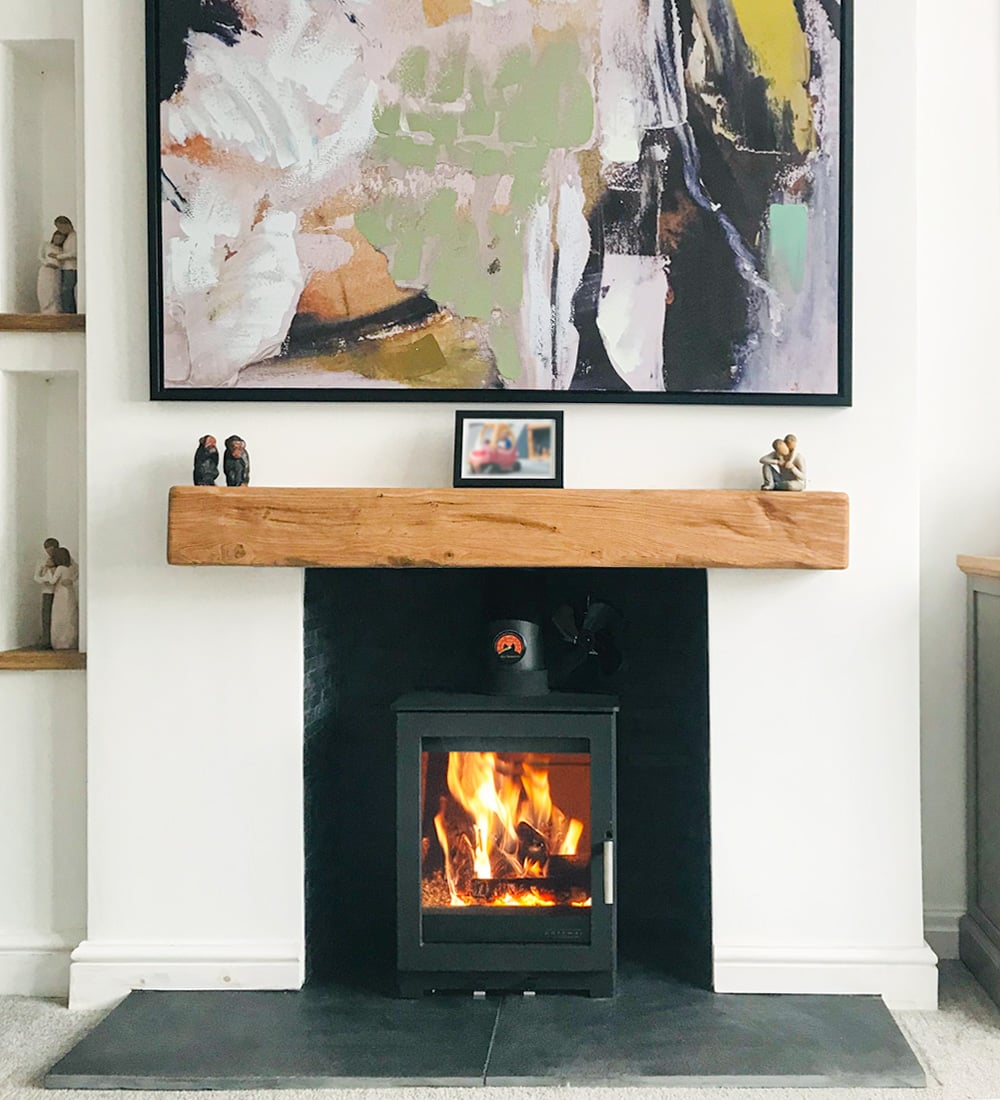
- Stoves sitting in open fireplaces or deep recesses (where heat usually gets trapped).
- Larger rooms or open-plan layouts.
- Older homes that suffer from uneven heating or draughts.
Who Might Not Need a Stove Fan?
- Small, enclosed rooms that heat quickly
- Homes with strong existing air circulation
- Situations where the stove already projects heat well
Where to Place a Log Burner Fan
Placement is everything. For the best results, place your fan on a flat, smooth surface near the back of the stove, slightly to the side of the flue pipe. Do not place it right at the front edge of the stove, as it won’t draw in the cooler air from behind to create the necessary thermal difference.
💡 Worth knowing: Keep the fan away from the flue pipe! Too hot = reduced performance and potential damage to the Peltier module.
Common Questions About Log Burner Fans
Do stove fans really save money?
Yes — stove fans can help reduce fuel use by distributing heat more efficiently, meaning less fuel is needed to maintain the same room temperature.
How much difference does a stove fan make?
Expect a moderate, highly noticeable improvement in room comfort. It won’t double the heat of your stove, but it will eliminate cold corners and make the room feel warmer, faster.
Do stove fans work in fireplaces?
Yes, and they are especially useful in fireplaces. If your stove is recessed into a fireplace, a fan is crucial for pushing the trapped heat out into the room instead of letting it rise up the chimney.
Can you use a stove fan on any wood burner?
They work on almost all wood-burning and multi-fuel stoves that have a flat, hot top surface. They are not suitable for cool-touch stoves or certain gas/electric models that don’t generate surface heat.
Where should you place a stove fan?
Place it on a flat surface near the back of the stove, slightly away from the flue pipe. This helps it draw in cooler air and circulate heat effectively. If your stove top has a cooler edge or corner, placing the fan there can improve performance by increasing the temperature difference across the unit.
Best Accessories to Use With a Stove Fan
To get the absolute most out of your log burner in 2026, pair your fan with these essentials:
- Flue thermometer: Helps you monitor the temperature to ensure your stove (and fan) are operating in the optimal efficiency zone.
- Stove gloves: Essential for safely opening the stove door and adding fuel when the unit is blazing hot.
- Fire tools: A good poker or tong set allows you to easily adjust logs for a better, more consistent burn.
Stop Wasting Heat
For most homes, it’s not about more heat — it’s about using the heat you already have properly.
A log burner fan is well worth it for most stove owners. It is a low-cost, zero-running-cost upgrade that fundamentally improves how your living space feels. While it won’t create more heat, it ensures that more of the warmth your stove produces is actually felt throughout the room.
If your stove isn’t heating the room as evenly as you’d like, a heat-powered fan is one of the simplest fixes — and that’s exactly what our 3 blade heat-powered stove fan is designed to do.
Read our other guides to help you get more from your stove
- 👉 How to build and light a fire in your wood-burning stove
- 👉 How to use your log burner vents
- 👉 What to do about cracked firebricks
- 👉 How to deal with rust in your wood-burner
- 👉 What to do if your stove is smoking
- 👉 How to get the most from your airwash system
↑ Back to top | Jump to sections ↑