







Are Pit Boss Grills Any Good? (Honest UK Review)
⏱️ Time to read:
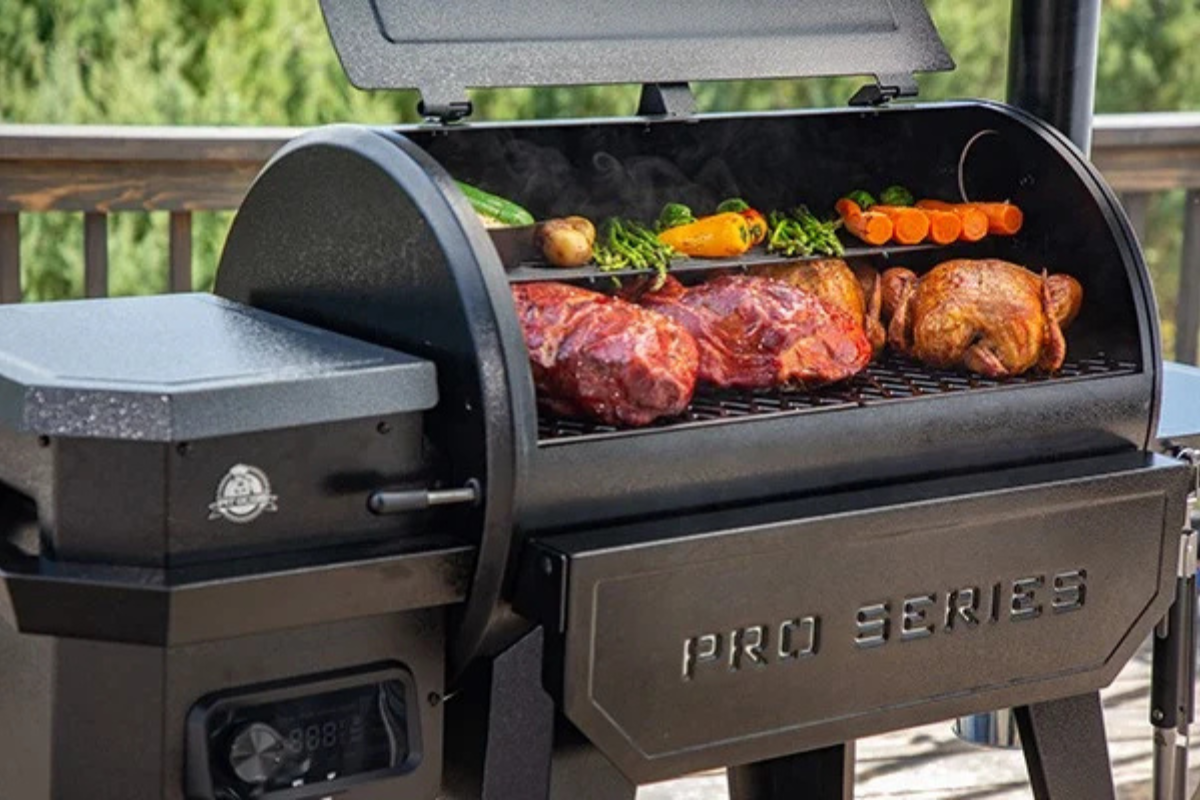
Pit Boss grills are everywhere right now — but depending on who you ask on Reddit or BBQ forums, they’re either the best value in outdoor cooking or a frustrating compromise.
If you are staring at a shopping cart wondering whether to pull the trigger on one of these heavy black barrels, you are probably looking for reassurance. You want to know whether they are actually built to last — or if you are going to regret not spending more on a different brand.
🧠 Quick Answer: Are Piss Boss grills any good?
Yes, Pit Boss grills are brilliant — but they are not the perfect choice for everyone.
Pit Boss grills are worth buying if:
- You want strong, authentic, wood-fired flavour
- You value versatility (smoking, roasting, and baking in one unit)
- You want the set-and-forget pellet grilling experience without paying premium-brand pricing
Pit Boss grills may not be ideal if:
- You want zero-maintenance cooking
- You mainly grill quick burgers and sausages every so often
🔑 Key Takeaways
- Best for: BBQ hobbyists, first-time smokers, and value-conscious buyers who want maximum coking real estate for their money.
- Biggest strengths: Incredible value, massive cooking capacity, heavy cast-iron grates, and genuine wood-smoke flavour.
- Biggest weaknesses: Thinner metals than premium rivals, susceptible to rust in damp UK weather if neglected, and temperature swings on non-PID models.
- Are they good value? Absolutely. They offer 80% of the premium pellet grill experience for a fraction of the price.
- Best alternative: If you want less maintenance and higher build quality, a premium gas grill from a brand like Napoleon is the smarter choice.
📍 Jump to section
Thinking about a Pit Boss? Jump straight to the honest pros, downsides, and buying advice.
Are Pit Boss Grills Any Good?

Let’s be honest for a second. The outdoor cooking industry is full of exaggerated marketing. Every brand claims their grill will change your life, make you a backyard hero, and effortlessly cook everything from brisket to a delicate soufflé.
When you look at Pit Boss, the appeal is obvious: they are big, they look aggressive, and they are priced very competitively. But when you are spending hundreds of pounds on a piece of outdoor equipment, “cheap” can sometimes just mean cheaply made.
So, are Pit Boss grills actually any good?
As a retailer that sees what gets bought, what gets returned, and what people actually use year after year, we have a pretty clear picture of where Pit Boss shines — and where it falls short. This isn’t a generic spec-sheet review. It is a practical look at what it is actually like to own, cook on, and maintain a Pit Boss pellet grill in the UK.
What Pit Boss Grills Do Well

There is a reason Pit Boss has taken a massive chunk of the market over the last few years. They didn’t just make an affordable pellet grill — they made a highly accessible one. If you look through our pellet grill category page, you will notice that Pit Boss often dominates the entry-to-mid-range price brackets.
Here is what they genuinely get right.
1. The Smoke Flavour is Genuine
A lot of people worry that a budget-friendly pellet grill will not produce the same quality of food as a traditional offset smoker or a high-end pellet rig. That simply is not true.
Pit Boss grills burn 100% natural hardwood pellets, so the smoke flavour is real. Because the fire comes from actual wood, you still get that authentic BBQ taste people are chasing in the first place. Whether you are cooking a 12-hour pork shoulder or a four-hour rack of ribs, a Pit Boss can absolutely deliver a proper smoke ring and deep, rich bark.
2. Unbeatable Value for Money and Cooking Space
This is the main event. Pound for pound, Pit Boss gives you more heavy-duty cooking space than almost anyone else. While premium brands might give you a relatively small 300-square-inch cooking area for £600, Pit Boss will often give you nearly double the space for similar money.
If you regularly cook for large family gatherings — or you want to smoke three racks of ribs and a brisket at the same time — Pit Boss makes that kind of capacity far more affordable.
3. Heavy Cast-Iron Grates
While many competitors use thin, porcelain-coated wire racks to save money, Pit Boss frequently equips its grills with heavy porcelain-coated cast-iron grates. These retain heat brilliantly, which makes a noticeable difference when you are trying to get a proper sear on a steak.
4. The Perfect Entry Point into Pellet Grilling
Pellet grills can feel intimidating if you have only ever cooked on charcoal or gas. Pit Boss makes the transition surprisingly easy. You plug it in, fill the hopper, set your temperature, and walk away. It is the ultimate gateway drug into low-and-slow BBQ.
If you are completely new to this style of cooking, reading through a beginner pellet grill guide will show you just how approachable the Pit Boss ecosystem really is.
In short: Pit Boss gives you most of the pellet-grill experience at a much lower price than premium competitors.
👉 Related: If you want to see the models that deliver the best balance of cooking space, smoke flavour, and value for money, browse our full range of Pit Boss pellet grills to compare sizes, features, and price points.
The Honest Downsides (And How to Manage Them)

Let’s talk expectations. As a retailer, we sell a lot of Pit Boss grills — and we genuinely like them. But we also want you to be thrilled with your purchase, which means setting realistic expectations.
You cannot build a massive, computer-controlled wood-burning smoker for a fraction of the price of a luxury brand without making a few trade-offs.
Here is what you need to know — and, more importantly, why some of these “downsides” might not actually matter to you.
1. Standard-Gauge Steel vs Premium Insulation
Pit Boss grills are heavy and solidly built, but they generally use standard-gauge steel for their barrels. If you compare that to a top-tier Traeger Timberline — which can cost well over £2,500 — you are paying for fully insulated, double-wall stainless steel designed to hold heat perfectly in freezing conditions.
- Does that difference matter? For 90% of the year in the UK, not really. A Pit Boss will hold temperature perfectly well for normal grilling and smoking. If you are a hardcore winter griller trying to smoke a turkey during freezing December winds, it will simply burn through a few more pellets to maintain heat.
- The easy fix? If you cook regularly in winter, buy a Pit Boss insulated thermal blanket. Problem solved for a fraction of the cost of stepping up to a premium grill.
2. Temperature Fluctuations (The “Smoke Factor”)
If you stare at the digital thermometer on a standard Pit Boss long enough, you will notice the temperature moving up and down by around 10 to 15 degrees. Some people panic and assume the grill is broken. It is not.
Many Pit Boss controllers manage the fire by letting it die down slightly before feeding in more pellets to stoke it back up.
- Does it matter? Honestly, for traditional BBQ, this is often a good thing. When the temperature dips and fresh pellets hit the fire pot, the grill produces that thick, rolling blue smoke that creates incredible flavour.
- The alternative? If you are baking delicate pastries and want clinical, oven-like precision, you might prefer the advanced D2 controllers found on mid-to-high-end Traeger models. But if you are cooking ribs, brisket, or pulled pork, the meat does not care about a 10-degree swing — it does care about the extra smoke flavour.
3. The Slide-Plate Flame Broiler Has a Learning Curve
Pit Boss heavily markets its Slide-Plate Flame Broiler — a metal shield that slides open to expose your food to direct flame. It is genuinely a clever feature that many pellet grills lack, but it is important to understand how it actually works.
The direct heat is concentrated in the centre of the grill, directly above the fire pot.
- Does that matter? Not really. It simply means you have a dedicated searing zone rather than wall-to-wall direct heat. It is excellent for reverse-searing a huge tomahawk steak or putting a proper char on a few burgers.
- The alternative? If you want to sear 15 burgers at once with perfectly even, edge-to-edge heat, a pellet grill probably is not the right tool in the first place. You would be better off looking at a dedicated gas BBQ — especially something from a brand like Napoleon.
4. Pellet Grill Maintenance is Universal
This is not a Pit Boss flaw — it is simply the reality of owning any pellet grill, whether it costs £600 or £3,000.
Wood pellets create ash. If you do not vacuum out the fire pot every three to five cooks, ash starts to build up, ignition becomes less reliable, and you can eventually run into auger jams. On top of that, if you leave pellets sitting in the hopper for weeks during a damp British winter, they will absorb moisture and swell.
- Does it matter? Not really — as long as you spend five minutes maintaining it properly.
- The easy fix? Buy a cheap ash vacuum, give the fire pot a quick clean before long cooks, and empty the hopper if you are not planning to use the grill for a while. Treat it well, and it will run like a dream.
⚠️ Reality Check: A lot of the “problems” people complain about with Pit Boss are not actually Pit Boss problems — they are pellet grill realities.
Every pellet grill, from a £600 Pit Boss to a £3,000 premium model:
- needs occasional ash clean-out
- burns through pellets during long cooks
- relies on electricity
- takes longer to heat up than gas
- requires a bit more involvement from the owner
The real question is not “Is Pit Boss perfect?”
It is whether the flavour, versatility, and cooking experience are worth those trade-offs for you.
Who Should Buy a Pit Boss Grill?

Buying a BBQ is really about matching the tool to your lifestyle. Pit Boss is a fantastic tool, but it is not for everyone.
You will probably love a Pit Boss if you are:
- A first-time pellet grill buyer — you want to try smoking brisket and ribs without taking out a second mortgage.
- A value-focused buyer — you want the biggest cooking area and the most features for your budget.
- A BBQ hobbyist — you do not mind getting your hands dirty, vacuuming out ash, and tinkering with the machine occasionally.
- A smoke-flavour enthusiast — you care more about authentic wood-fired flavour than having a shiny stainless steel showpiece sitting on your patio.
👉 Ready to Explore Pit Boss Grills?
If that sounds like you, browse our full range of Pit Boss pellet grills to compare cooking sizes, features, and smoker styles — from compact beginner-friendly models to massive backyard BBQ workhorses.
You should probably avoid Pit Boss if you are:
- Someone wanting ultra-simple cooking — if vacuuming ash and managing wood pellets sounds like a chore, this probably is not the right type of grill for you.
- A premium outdoor kitchen buyer — if you want a flawless built-in aesthetic, Pit Boss’s rugged, utilitarian styling may not fit the look you are after.
- A convenience-first user — if you get home from work at 6:00 PM and want to be eating chicken breasts by 6:20 PM, a pellet grill is simply too slow. You are better off looking at a gas BBQ.
👉 Prefer Fast, Hassle-Free Grilling?
If convenience matters more to you than wood-smoke flavour, a premium gas BBQ will probably suit your lifestyle much better. Explore our range of high-performance gas grills from brands like Napoleon for faster heat-up times, easier cleaning, and effortless weeknight cooking.
Pit Boss vs Napoleon — Which is Better?
This is a question we get constantly. Buyers often narrow their shortlist down to a high-end Pit Boss pellet grill or a mid-range Napoleon gas grill because they often sit at similar price points.
We are not going to declare a universal winner here because they serve completely different purposes. Comparing them is a bit like comparing a rugged Land Rover to a sleek Audi saloon.
Choose Pit Boss if you want a more hands-on BBQ experience
Pit Boss is for the weekend BBQ enthusiast. It is for the person who wants to wake up early, prep a piece of meat, and smell wood smoke rolling through the garden all day.
It has a much stronger hobbyist appeal, and the food you produce on a Pit Boss will have a depth of flavour that gas simply cannot fully replicate.
However, you pay for that flavour with your time:
- time waiting for the grill to heat up
- time spent cleaning ash
- time managing pellets and maintenance
For a lot of people, that trade-off is part of the fun.
Choose Napoleon if you want a refined, low-hassle ownership experience
Napoleon is a masterclass in convenience and engineering. If you browse the Napoleon BBQ category page, you will see grills built with premium stainless steel, industry-leading warranties, and exceptionally polished fit and finish.
A Napoleon gas grill:
- ignites almost instantly
- reaches 300ºC in minutes
- is ideal for fast weeknight cooking
- requires far less ongoing maintenance
You can cook steaks, shut the burners off, brush the grates, and you are basically done. There is no ash, no auger to jam, and no pellets to worry about storing through winter.
If you want a highly refined, zero-fuss cooking experience for regular weeknight meals, Napoleon probably wins hands down.
👉 If you are still torn between the two fuel types, our charcoal vs pellet vs gas comparison guide dives much deeper into the day-to-day realities of owning each one.
Common Complaints About Pit Boss Grills (And Whether They Matter)

If you spend enough time on Reddit or Trustpilot, you will see a few recurring complaints about Pit Boss. Let’s look at them honestly and decide whether they are genuine dealbreakers.
- “It’s too much hassle to clean.”
Is it serious? Yes, if you do not want to do any maintenance.
Who it affects most: Convenience-seekers.
The verdict: Pellet grill maintenance is real. If you do not want to buy a cheap ash vacuum and spend 10 minutes cleaning the fire pot every three to four cooks, a pellet grill probably is not for you. - “My Pit Boss started rusting after one winter!”
Is it serious? It can be, yes.
Who it affects most: People who leave their grill uncovered in the garden.
The verdict: This is a fair criticism of thinner powder coating, but it is also easy to prevent. The UK climate is incredibly harsh on steel. If you buy a Pit Boss, buy a high-quality waterproof cover. If you look after it, it should last. If you leave it exposed to British rain, it will rust. - “The temperature swings wildly!”
Is it serious? Usually not.
Who it affects most: People trying to bake precise pastries, or those who obsessively watch the thermometer.
The verdict: Mostly overblown. As mentioned earlier, temperature swings are part of how non-PID pellet grills generate smoke. Your meat will be fine if the ambient temperature briefly drops by 10 degrees. - “Wood pellets are too expensive.”
Is it serious? It depends how much you cook.
Who it affects most: Heavy users cooking four to five times a week.
The verdict: Running a pellet grill is usually more expensive per hour than running a gas grill. That said, you can often save money by buying pellets in bulk. - “It uses electricity, so I can’t put it at the bottom of the garden.”
Is it serious? Yes, if you do not have outdoor power.
Who it affects most: People with long, narrow gardens and no outdoor sockets.
The verdict: Fair. Pellet grills need a constant mains power connection to run the digital board, auger motor, and fan. The electricity usage is low, but the need for a plug is non-negotiable.
💡 Worth Knowing: Most Pit Boss complaints come from people expecting a pellet grill to behave like a gas BBQ.
Pellet grills are slower to heat up, require occasional cleaning, and need dry pellet storage — but in return, you get authentic wood-fired flavour that gas simply cannot replicate.
If you go into the purchase understanding that trade-off, most owners end up extremely happy with their Pit Boss.
So, Are Pit Boss Grills Actually Worth Buying?
If you want premium perfection, flawless stainless steel, and near-zero maintenance, probably not.
But if you want excellent wood-fired flavour, incredible versatility, and genuinely strong value for money, absolutely.
Pit Boss has helped democratise the low-and-slow BBQ movement. It has made it possible for ordinary people to smoke competition-style ribs and brisket in their back gardens without spending thousands of pounds.
Yes, the metal is a bit thinner. Yes, you need to vacuum out ash occasionally. Yes, you need to keep your pellets dry.
But when you pull a perfectly smoked, mahogany-coloured pork shoulder off the grates, tear it apart with a fork, and taste that authentic wood-fired bark, most of those minor inconveniences suddenly stop feeling very important.
Our Final Recommendation:
- 👉 If you are on a budget but want to get into smoking: Pit Boss is arguably the best-value option on the market. Buy a good cover, keep it clean, and it will serve you incredibly well.
- 👉 If you have a bigger budget and hate maintenance: Skip pellet grills entirely and invest in a premium gas BBQ from Napoleon.
- 👉 If you want the pellet-grill experience but demand luxury build quality: You will need to significantly increase your budget and look at premium pellet brands like Traeger.
Pit Boss is not trying to be a luxury status symbol. It is a working-class workhorse that cooks phenomenal food. Once you understand the trade-offs, a Pit Boss grill becomes one of the smartest outdoor cooking investments you can make for your patio.
You might also like:
- 👉 What BBQ should I buy as a beginner?
- 👉 Are Napoleon BBQs any good? Honest UK review
- 👉 Gas vs charcoal vs pellet grills: Which one should you buy?
- 👉 A guide to different wood flavours for pellet grilling
↑ Back to top | Jump to sections ↑