








Log Stores Explained: Should You Build or Buy One?
⏱️ Time to read:
Picture this: It’s a freezing January evening. You step out into the drizzle to grab some firewood, only to find the bottom half of your pile is damp, rotting, and covered in moss. You throw a few logs into your wood-burning stove, but instead of a roaring fire, you get hissing, thick smoke, and blackened stove glass.
If this sounds familiar, your firewood storage is costing you money and heat.
A log store isn’t just a wooden box for the garden — it is directly responsible for the performance of your stove. Dry, well-ventilated wood burns hotter, cleaner, and more efficiently. But when it comes to upgrading your firewood storage, a common question arises: should you roll up your sleeves and build one, or save time and buy a purpose-built log shed?
Let’s break down the options so you can make the right choice for your home, budget, and heating needs.
🧠 Quick Answer: Should you build or buy a log store?
When to build a log store:
You have strong carpentry skills, access to spare pressure-treated timber, and a highly specific, awkward space that requires custom dimensions.
When to buy a log store:
You want guaranteed airflow, immediate setup, long-term weather resistance, and a stylish finish that enhances your garden without giving up your weekend to build it.
The best option depends on:
- Space: For narrow alleyways or patios, buying a slimline, pre-measured unit ensures a perfect fit.
- Budget: DIY is cheaper only if you already own the tools and scrap timber. Otherwise, buying a pre-made store offers better long-term value and durability.
- Usage: If you rely on your stove daily, buying a heavy-duty, large-capacity log shed guarantees your fuel stays dry and ready to burn.
🔑 Key Takeaways
- Airflow is critical: A log store’s primary job is to circulate air, not just block rain.
- Size depends on usage: Occasional burners need a small unit; daily burners need bulk storage.
- Poor storage = wasted fuel: Damp wood produces less heat and damages your stove flue.
- Buying is often more reliable: Purpose-built stores are engineered with the exact slat spacing needed to season wood perfectly in the UK climate.
📍 Find what you need
Skip straight to the sections that matter most.
What is a Log Store?

Keep it simple: a log store is a ventilated outdoor shelter designed to keep firewood dry while allowing wind to pass through it.
Whether you are seasoning freshly chopped green wood or simply storing kiln-dried logs, a log store protects your fuel from the worst of the UK weather while drawing out residual moisture. It is the bridge between buying your fuel and getting maximum heat output from your wood-burning stove.
Build vs Buy: Which is Right for You?
Building a DIY Log Store
Pros:
- Customisation: You can build it to fit exact, unconventional spaces.
- Cost (sometimes): If you have leftover pallets, roofing felt, and screws, it can be a cheap weekend project.
Cons:
- Time-consuming: Sourcing materials, measuring, cutting, and treating the wood takes significant time.
- Airflow errors: If the slats are too close together, the wood will rot. If the roof overhang is too short, rain will soak your logs.
- Durability: Untreated DIY timber rots quickly in the damp UK climate.
Buying a Pre-Made Log Store
Pros:
- Engineered for efficiency: Pre-made stores have mathematically spaced slats to guarantee optimal airflow.
- Weatherproof: Quality stores use pressure-treated timber designed to withstand decades of British rain.
- Instant setup: Delivered flat-packed or fully assembled, saving you hours of labour.
- Aesthetics: They look neat, professional, and add a rustic charm to your garden.
Cons:
- Upfront cost: You pay for the materials and craftsmanship.
- Fixed sizes: You must choose from standard dimensions (though there’s a wide variety available).
The Verdict: Unless you are an avid DIY-er with spare treated timber, buying a log store is usually the smartest route. A poorly built DIY store can ruin a £150 bulk bag of logs in a single winter — making a pre-made store a worthwhile investment.
Log Store Ideas for Every Space

Not all gardens are created equal. Here is how to match a log store design to your specific space and use case:
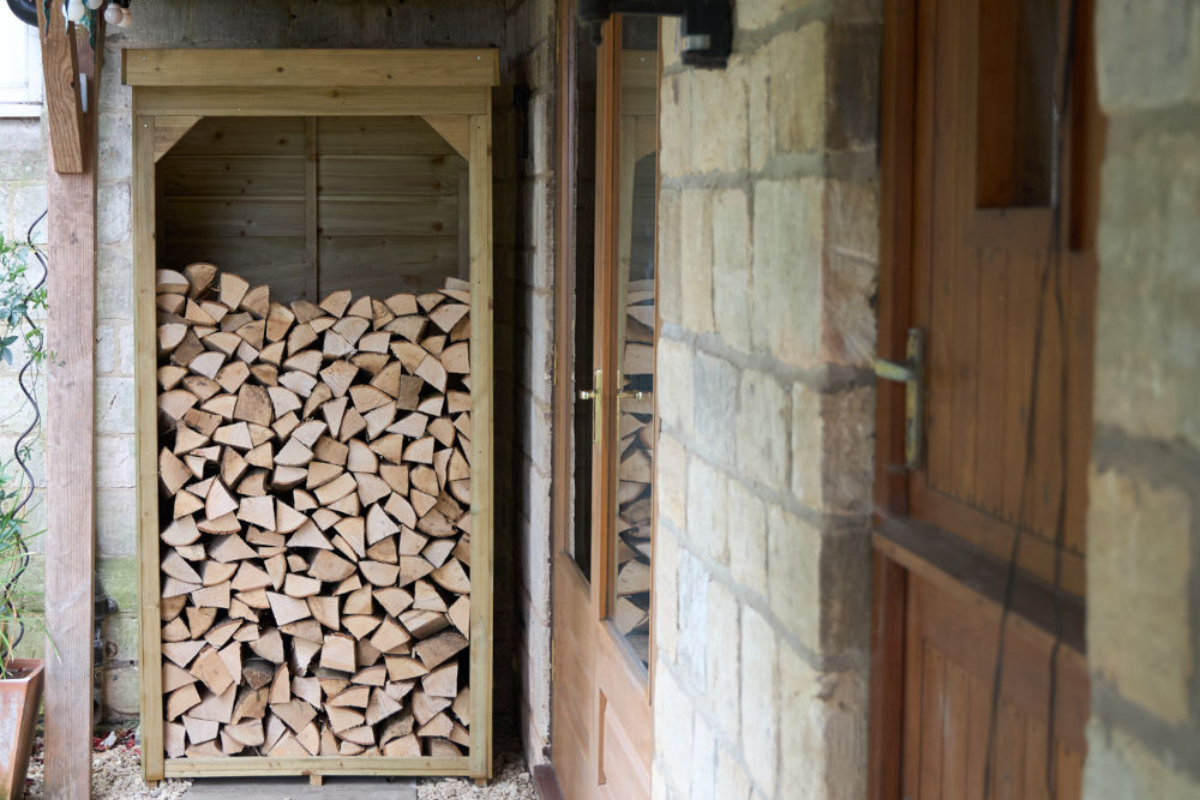
- Small Gardens & Compact Spaces: Look for slimline, tall log stores. These use vertical space to hold a surprising amount of wood without eating into your patio.
- Large Capacity Storage: If you buy logs by the cubic metre, look for double-width or extra-deep log sheds. These often feature a central divider, allowing you to separate older, dry wood from newer, unseasoned logs.
- Wall-Mounted & Narrow Designs: Perfect for side alleys or walkways. These sit flush against a boundary wall (remember to leave a small gap for airflow) and keep logs easily accessible.
- Decorative & Modern Styles: For contemporary homes, metal log stores or circular/hexagonal designs act as a garden feature while keeping your fuel dry.
👉 Related: Need help finding the right fit? Browse our full range of log stores to compare slimline, large-capacity, wall-mounted and decorative designs for every garden space.
What Size Log Store Do You Need?
A common mistake is buying a store that is too small, forcing you to buy firewood in smaller, more expensive bags. Here is a simple rule of thumb for the UK:
- Occasional use (1–2 fires a week): A small store holding 0.5–1 cubic metre is plenty.
- Weekend use (every Friday to Sunday): Aim for 1–1.5 cubic metres.
- Daily heating (primary heat source): You need bulk storage. Look for a store that holds 2 cubic metres or more.
💡 Worth Knowing: Always buy a log store slightly larger than you think you need. Buying firewood in bulk is significantly cheaper, and you’ll need the space to store it.
Where to Put a Log Store
Placement is just as important as the store itself.
- Airflow: Never push a log store flush against a house wall. Leave a 2–3 inch gap behind it so air can circulate.
- Rain Protection: Face the open front away from the prevailing wind and rain (usually away from the south-west in the UK).
- Accessibility: Keep it close enough to the house that you won’t mind walking to it on a dark, freezing night.
- Avoiding Damp: Don’t place it directly beneath a leaky gutter or against a damp-prone wall.
💡 Worth Knowing: The best place for a log store is somewhere sheltered but well-ventilated. Avoid fully enclosed corners, as trapped air can slow down drying and encourage damp. A sunny, breezy spot with the open front facing away from heavy rain will help your logs stay drier for longer.
Common Mistakes to Avoid

- Storing logs on the ground: Wood acts like a sponge. If it touches damp soil or patio slabs, it will draw moisture up. A good log store always has a raised, slatted base.
- No airflow: Stacking logs too tightly against solid walls prevents wind from drying them out.
- Trapping moisture with covers: Throwing a plastic tarpaulin tightly over a pile of wood traps condensation, leading to mould and rot. A roofed log store is always better than a wrapped tarp.
- Overfilling: Cramming wood right up to the roof restricts the airflow needed to keep the top layer dry.
The Basics of a DIY Log Store
If you are determined to build your own, keep these three non-negotiable rules in mind:
- Raised Base: Use heavy-duty slats to keep the bottom row of logs at least 3 inches off the ground.
- Sloped Roof: Angle the roof forward so rain runs off the front, away from your house wall. Use roofing felt or overlapping timber.
- Ventilated Sides: Leave gaps between your side and back panels. Wind is what dries wood, not just the absence of rain.
FAQ
Do I need planning permission for a log store in the UK?
In most cases, no. Log stores are generally classed as “permitted development” under UK planning rules, similar to a standard garden shed. However, to avoid any issues, make sure the structure is no higher than 2.5 metres if it is placed within 2 metres of your property boundary, and do not place it beyond the front wall of your house. If you live in a listed building or a conservation area, it is always best to check with your local council first.
How long does it take to season freshly cut wood in a log store?
If you are storing “green” (freshly chopped) wood, it typically takes between 12 to 24 months to season properly in a UK climate. Softwoods dry faster (around 12 months) while dense hardwoods can take up to two years. If you don’t want to wait, we recommend stocking your store with ready-to-burn kiln-dried logs, which have a moisture content below 20% and can be used immediately.
Should a log store have doors?
Generally, no. The most crucial element of a log store is airflow, and solid doors restrict the wind needed to draw moisture out of the wood. An open front is the most efficient design. If you are concerned about driving rain, look for a log store with a generous roof overhang rather than adding doors.
How do I stop insects and pests from living in my firewood?
Insects and woodlice are attracted to damp, decaying wood. The best way to keep pests at bay is to ensure your logs dry out as quickly as possible. A high-quality log store with a raised slatted base and excellent ventilation will naturally deter pests by keeping the environment dry. Never spray insect repellent on your firewood, as this will release toxic chemicals into your home when burned.
Do I need to treat or paint a pre-made log store?
If you purchase a log store made from pressure-treated timber, it is already protected against rot, fungal decay, and wood-boring insects for many years without needing extra treatment. However, if you want to change its colour to match your garden fences, you can safely apply a breathable exterior wood stain or paint. Just ensure the treatment is fully dry before stacking your logs.
Buying a Log Store: The Smart Investment
For most wood-burning stove owners, buying a pre-made log store is the most practical choice.
A high-quality, purpose-built log store takes the guesswork out of firewood storage. Because they are designed with optimal slat spacing, sloped roofs, and pressure-treated timber, they actively help your wood reach the ideal moisture content — under 20%.
When your wood is perfectly dry, your stove burns hotter, you use fewer logs, and your chimney stays cleaner. In the long run, a good log store pays for itself in fuel savings.
Ready to upgrade your firewood setup? Browse our full range of heavy-duty, UK-weatherproof log stores here, or check out our guide on choosing the best kiln-dried logs for your stove.
You might also like:
- 👉 What not to burn in a wood burner (and what you should use instead)
- 👉 Why burn kiln-dried firewood?
- 👉 How to store kiln-dried firewood
- 👉 How much firewood do you need to order in bulk?
- 👉 The hidden costs of cheap firewood
- 👉 What wood should you burn outdoors?
- 👉 What's the easiest way to split logs?
- 👉 How to store firewood near your stove safely
Need more advice?
- 📍 Visit us: See a range of wood-burning stoves and get advice on fuel, firewood and usage at our showrooms
- 📧 Get in touch: Contact our team if you have any questions about buying log stores or firewood in bulk
↑ Back to top | Jump to sections ↑